
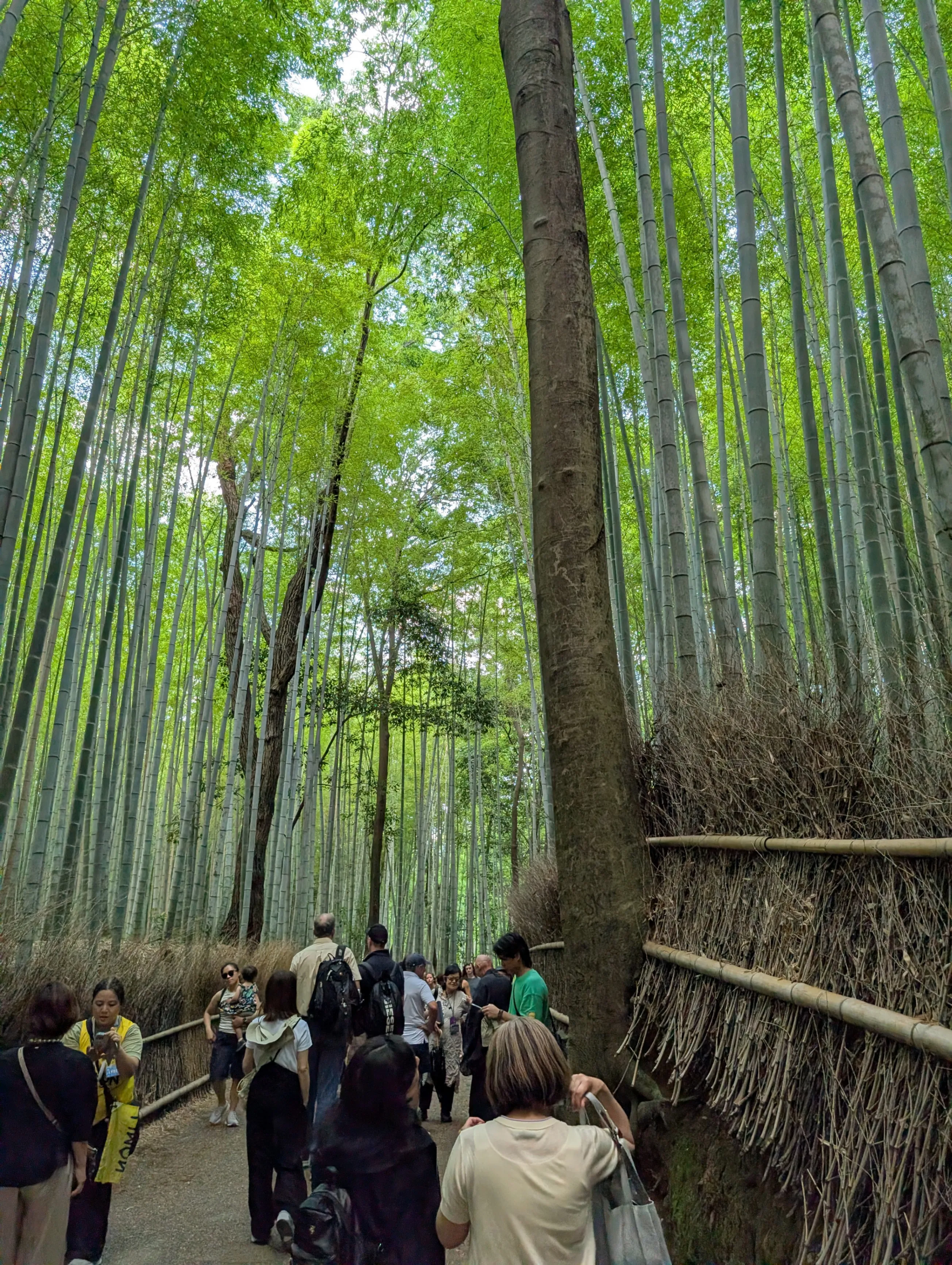
Arashiyama’s bamboo grove is one of those places that almost everyone has seen before arriving in Kyoto. Tall green stalks rise on either side of narrow paths, their leaves forming a canopy overhead. The photographs are instantly recognizable.
What is easier to miss is how well the bamboo works as part of a larger journey.
One particularly memorable approach begins with the Sagano Romantic Train, following the Hozugawa River from Kameoka into Arashiyama. Passengers can get off at Torokko Arashiyama Station for the most direct route into the bamboo, or remain aboard for the final few minutes to Torokko Saga Station.
From Torokko Arashiyama, the change of scenery is almost immediate. Bamboo is already visible around the station, and after climbing from the platform and passing through the small station area, it takes barely a minute to find yourself among it.
Instead of treating the bamboo as a box to tick before rushing to the next attraction, give the route somewhere to lead. One of its best destinations is waiting right along the way: Tenryu-ji.
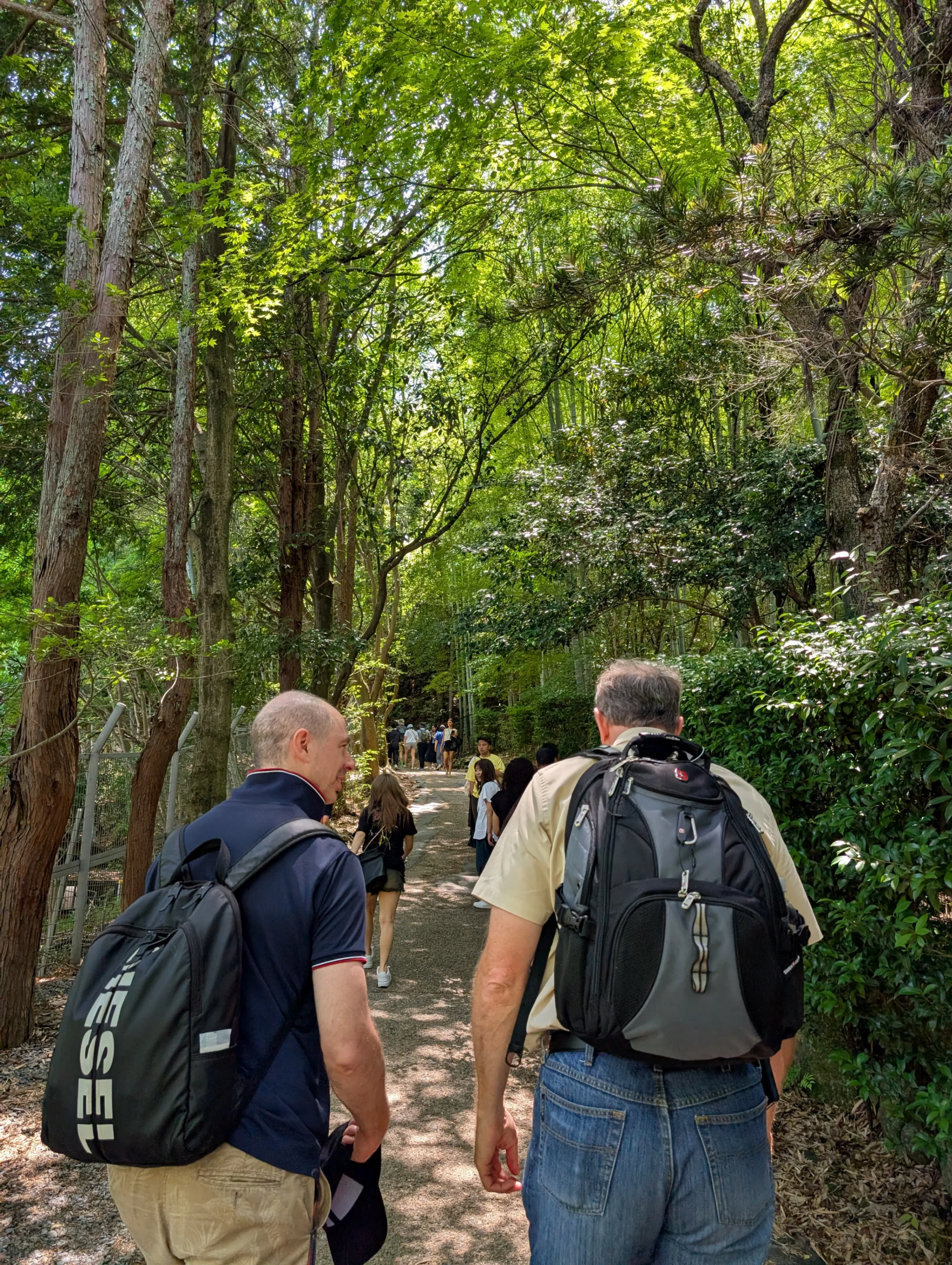
Photo by MapZamurai
Don’t Stop at the First Bamboo
Just outside Torokko Arashiyama Station, several paths branch through the area, and it is surprisingly easy to head away from the intended route. Check the posted map or signs before simply following whoever happens to be walking ahead.
The first stretch is relatively open, with bamboo on one side and, in places, a fence overlooking the railway below. Before long, bamboo begins to surround the path.
Nearby is Okochi Sanso Villa, the former retreat of film actor Denjiro Okochi. Its gardens require separate admission, making it an optional detour for travelers with extra time rather than a necessary part of the route.
Beyond this area, the crowds usually become more noticeable. They also have a habit of bunching up at the first place where the bamboo suddenly looks spectacular.
There is no need to join the scrum.
Keep walking. The path continues through different bends and compositions, and there are plenty of opportunities farther along. Passing that first knot of photographers can be much more satisfying than waiting for everyone in front of you to finish taking the same photograph.
There Is More Than One Bamboo Path
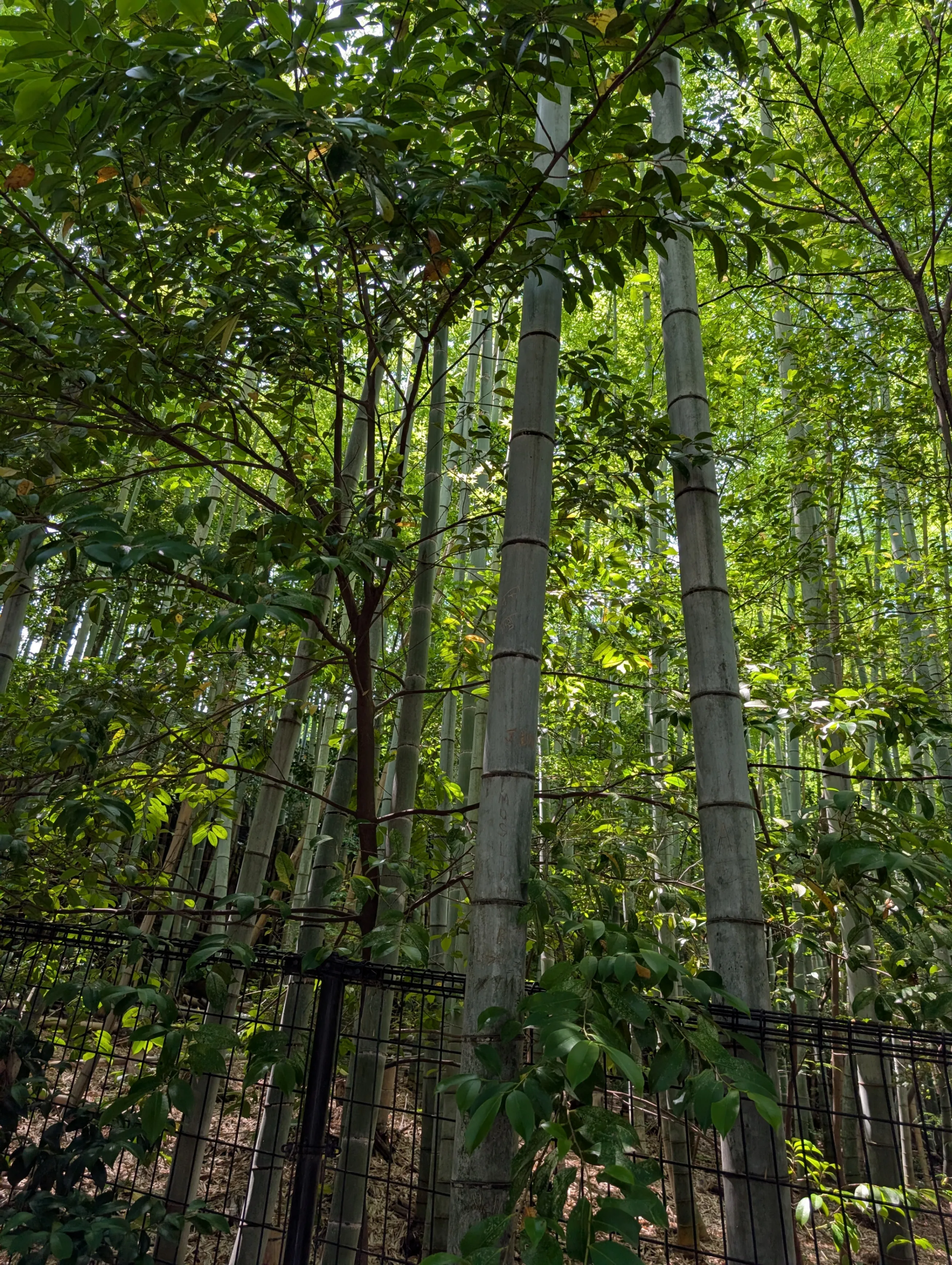
What is commonly called the “Arashiyama Bamboo Grove” is not simply one path through one neatly defined forest.
The best-known route is Chikurin-no-Komichi, or the Path of Bamboo, which runs for about 400 meters between the area around Okochi Sanso Villa and Nonomiya Shrine, passing the North Gate of Tenryu-ji along the way. Its tall bamboo fences and dense ranks of stalks create many of the classic Arashiyama photographs.
There is also a separate Bamboo Forest Trail extending north from the Nonomiya Shrine area. Opened in 2015, it has a broader, winding path through another substantial section of bamboo and feels different from the more enclosed Chikurin-no-Komichi.
If bamboo is one of the main reasons for coming to Arashiyama, it is worth checking the area map and exploring both. You have come this far, so you might as well get the most bam for your boo.
Bamboo itself is hardly rare in Japan. Groves and stands appear beside temples, shrines, parks, roadsides and hillsides around the country. What makes Arashiyama unusual is the scale and maintenance of the bamboo landscape, combined with its position among some of western Kyoto’s most interesting historic and natural sights.
Crowds Are Part of Arashiyama
Search for advice about visiting Arashiyama and one recommendation appears again and again: arrive extremely early.
That certainly makes sense if photographing an almost empty bamboo path is the overriding goal. For everyone else, it may not be worth skipping a beautiful ryokan breakfast or reorganizing an entire Kyoto morning just to compete with all the other visitors who read the same advice.
The more useful strategy is to manage expectations rather than your entire vacation.
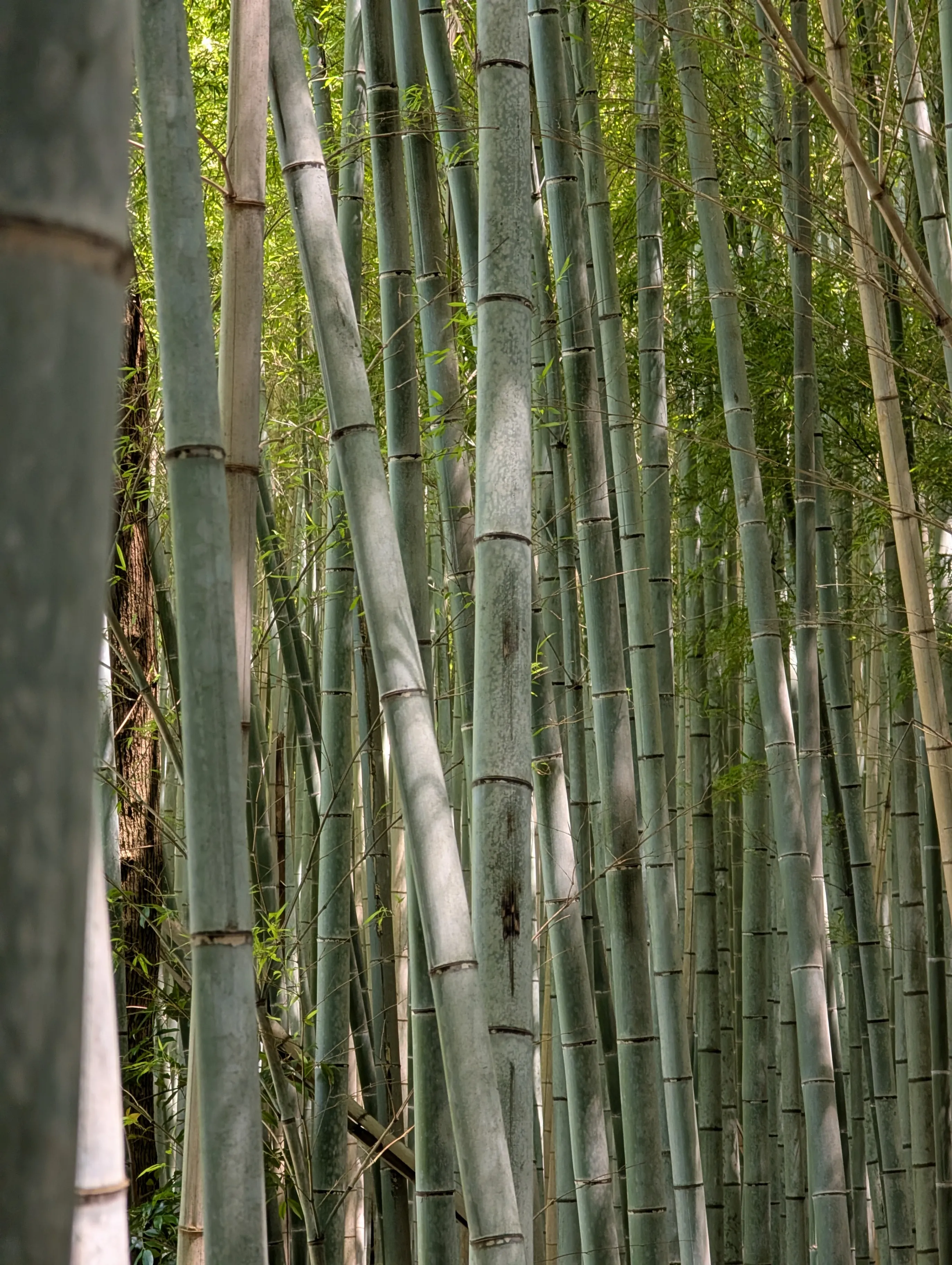
Crowds do not automatically ruin the bamboo. In fact, people can add something to the photographs. The bamboo creates a striking vertical landscape: dense, slender stalks stretch upward while the people standing and walking beneath them provide both another vertical element and an immediate sense of scale.
Move around, look farther down the path and wait occasionally rather than expecting the entire grove to clear. Even on a busy day, a bend in the path or a brief opening between groups can produce photographs that suggest a mysterious path disappearing into the bamboo.
The experience can occasionally provide its own surprises as well. Street performers sometimes appear around Arashiyama, although they should never be expected. A shamisen player encountered beside the bamboo on one visit provided an unexpected soundtrack to the walk. If you are lucky, the sound of the grove may include more than wind rustling through the leaves.
From Looking Up to Looking Down
One of the smartest ways to experience the bamboo is to let it lead directly into Tenryu-ji.
The temple’s North Gate opens onto the bamboo route, making the transition almost seamless. After spending much of the walk looking upward at towering stalks, entering Tenryu-ji changes both the scale and the direction of attention.
The first major garden encountered from this side is Hyakka’en, the Garden of a Hundred Flowers. Its narrow paths curve among flowering trees, bushes and other plants on a gently sloping hillside. Compared with the visual uniformity of the bamboo, it feels more varied and intimate—wilder in appearance, but clearly nurtured and shaped.
People behave differently here too. Instead of pointing cameras toward the canopy, visitors slow down, look toward individual flowers and plants, and crouch for close-up photographs.
The change is refreshing. Within a matter of minutes, the experience shifts from the tall, enclosed vertical lines of the bamboo to color, detail and winding garden paths.
Travelers interested in continuing deeper into the quieter Saga area can also explore Nison-in Temple, northwest of the main Arashiyama sightseeing area.
Tenryu-ji Opens the Landscape Again
Continuing through Hyakka’en brings another change.
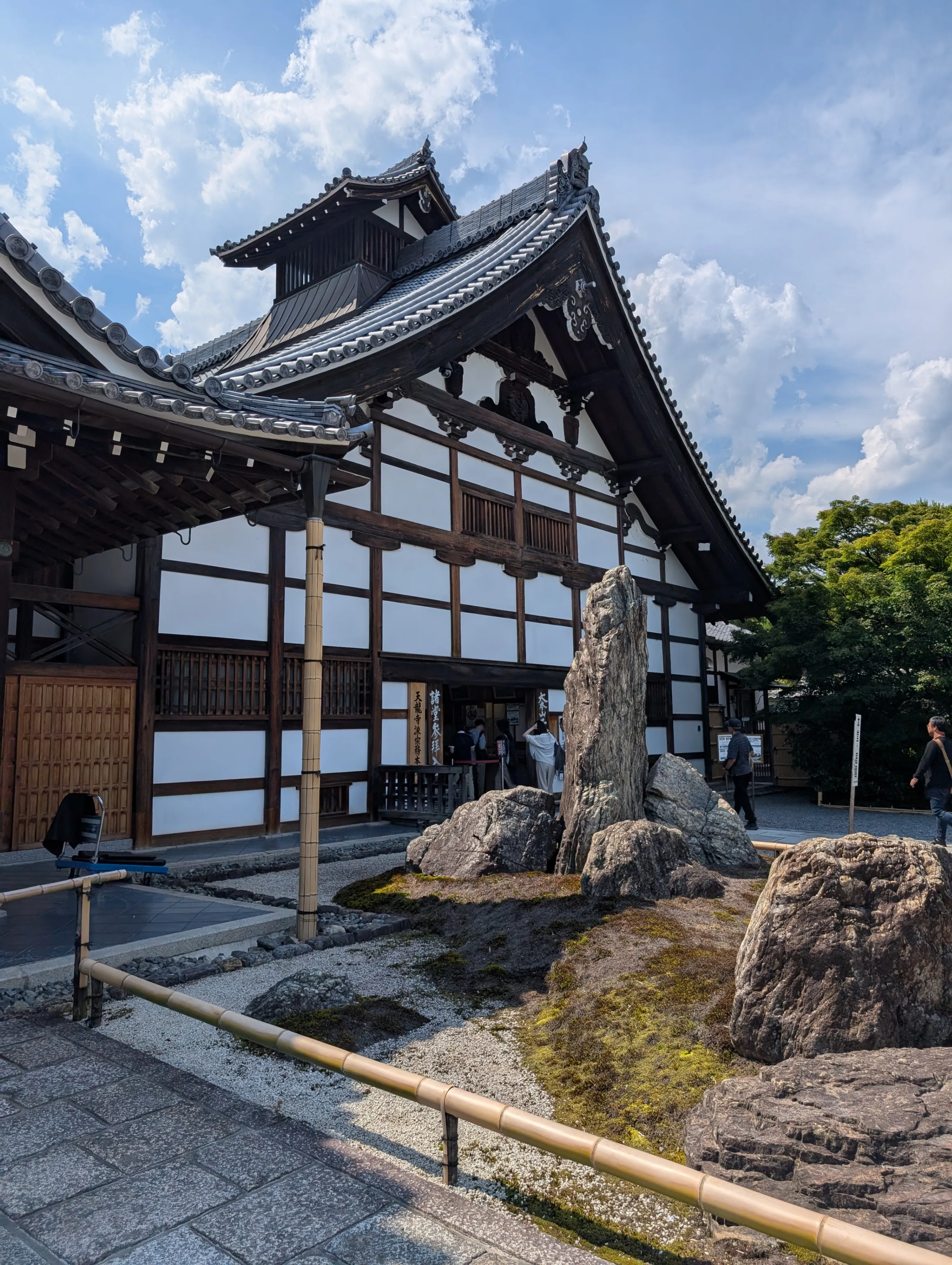
The paths open into the main Tenryu-ji grounds, where temple buildings, covered wooden walkways, gardens and broad open spaces replace the enclosed feeling of the bamboo.
The temple interiors are tantalizingly close to the outdoor route. Open-sided corridors and verandas sit beside the gardens, sometimes only a short distance away, while their separate entrances make them feel like another layer of the temple waiting to be explored. Visitors who want to enter the main buildings can purchase the additional admission, while those concentrating on the gardens can continue outside.
The most famous landscape is Sogenchi Garden, created by Zen master Muso Soseki in the 14th century. The pond garden uses the surrounding mountains as borrowed scenery and is designed to reveal different perspectives as visitors move around it.
One particularly compelling view is from the Hojo veranda, where visitors often sit quietly facing across the pond toward the garden and mountains beyond.
It completes another striking change in perspective. In the bamboo, the eye is drawn upward. In Hyakka’en, attention moves down toward flowers and details. At Sogenchi, the natural direction is outward, across water, rocks, trees and the surrounding landscape.
There is no need to decide which is the climax. Each space asks visitors to look at Arashiyama differently.
How Much Time Should You Allow?
The bamboo itself can take anywhere from around 15 minutes to more than an hour, depending on which paths are explored, how busy they are and—perhaps most importantly—how many Instagrammable photographs need to be taken.
For the outdoor gardens of Tenryu-ji, about 45 minutes allows a comfortable single pass without rushing. Around 90 minutes gives considerably more freedom to linger, photograph the gardens and explore at a slower pace. Allow additional time if entering the temple buildings.
Together, roughly 1.5 to 3 hours is a useful planning range for the bamboo and Tenryu-ji.
With only an hour, a traveler already in central Arashiyama could spend roughly 15 minutes experiencing part of the bamboo and around 45 minutes in the temple gardens. An hour and a half makes the combination much more comfortable.
With two or three hours, there is room to slow down, explore more of the bamboo and understand what is being seen rather than simply moving between photo locations. Travelers who prefer more context can consider an Arashiyama Bamboo and Gardens guided experience, which combines the bamboo with Tenryu-ji and other nearby sights.
Arriving on the Sagano Romantic Train makes this part of a larger itinerary rather than adding time to those estimates. Think of the railway as the scenic opening act, with the bamboo and Tenryu-ji forming the next chapter.
Practical Tips
The route through the bamboo and Tenryu-ji is generally an easy walk, but it is not completely step-free. Torokko Arashiyama Station has about 60 steps between the platform and ticket gate and no elevator. The Sagano Scenic Railway recommends Torokko Saga Station instead for wheelchair users and visitors using walking sticks.
Tenryu-ji charges admission for its gardens, with an additional fee for entry to the main buildings. Opening hours and admission arrangements can change, so check the official Tenryu-ji website before visiting.
Footwear suitable for walking is more important than specialized equipment. The biggest variable is likely to be the crowd rather than the terrain.
Most importantly, resist the temptation to treat the bamboo as a five-minute photo stop. Approached from the Sagano railway side and followed through Tenryu-ji, it becomes part of a remarkably varied sequence: train, bamboo, flowers, temple architecture and finally the broad landscape of Sogenchi Garden.
From Tenryu-ji’s eastern side, the streets of central Arashiyama are waiting just outside. The bamboo may be the image that brought many visitors here, but it does not have to be the end of the journey.
Continue through central Arashiyama toward the river with our guide to Togetsukyo Bridge and Randen Arashiyama Station: From River Views to the Kimono Forest, which follows the route through the busy shopping streets to the riverside, across Arashiyama’s famous bridge, and to the colorful Kimono Forest at Randen Arashiyama Station.
Frequently Asked Questions
How long does it take to walk through the Arashiyama Bamboo Grove?
A quick walk through part of the bamboo area can take around 15 minutes, but allow 30–60 minutes or more for photographs and exploring both main bamboo paths.
What is the best time to visit the Arashiyama Bamboo Grove?
Early morning generally offers the best chance of encountering fewer people. However, visitors who are not concerned about getting empty-path photographs should not feel that an extremely early start is essential. The bamboo can still be enjoyed when it is busy.
Is there more than one bamboo path in Arashiyama?
Yes. The famous Chikurin-no-Komichi is the best-known route, but there is also a separate Bamboo Forest Trail near the Nonomiya Shrine area. Visitors particularly interested in the bamboo should consider exploring both.
Can you enter Tenryu-ji directly from the bamboo grove?
Yes. Tenryu-ji's North Gate opens directly onto the bamboo route. Entering here leads through Hyakka'en before reaching the temple's main garden and buildings.
How much time should you allow for the bamboo grove and Tenryu-ji together?
Around 1.5 hours is enough for a comfortable visit to both, while 2–3 hours allows more time for photographs, both bamboo paths, the gardens and a slower exploration of Tenryu-ji.
Which Sagano Romantic Train station is best for the bamboo grove?
Torokko Arashiyama Station provides the most direct access to the bamboo, but passengers arriving from Kameoka can also remain on the train to Torokko Saga Station. Torokko Arashiyama has about 60 steps between the platform and exit and no elevator, so Torokko Saga is the better choice for visitors who need step-free access.