
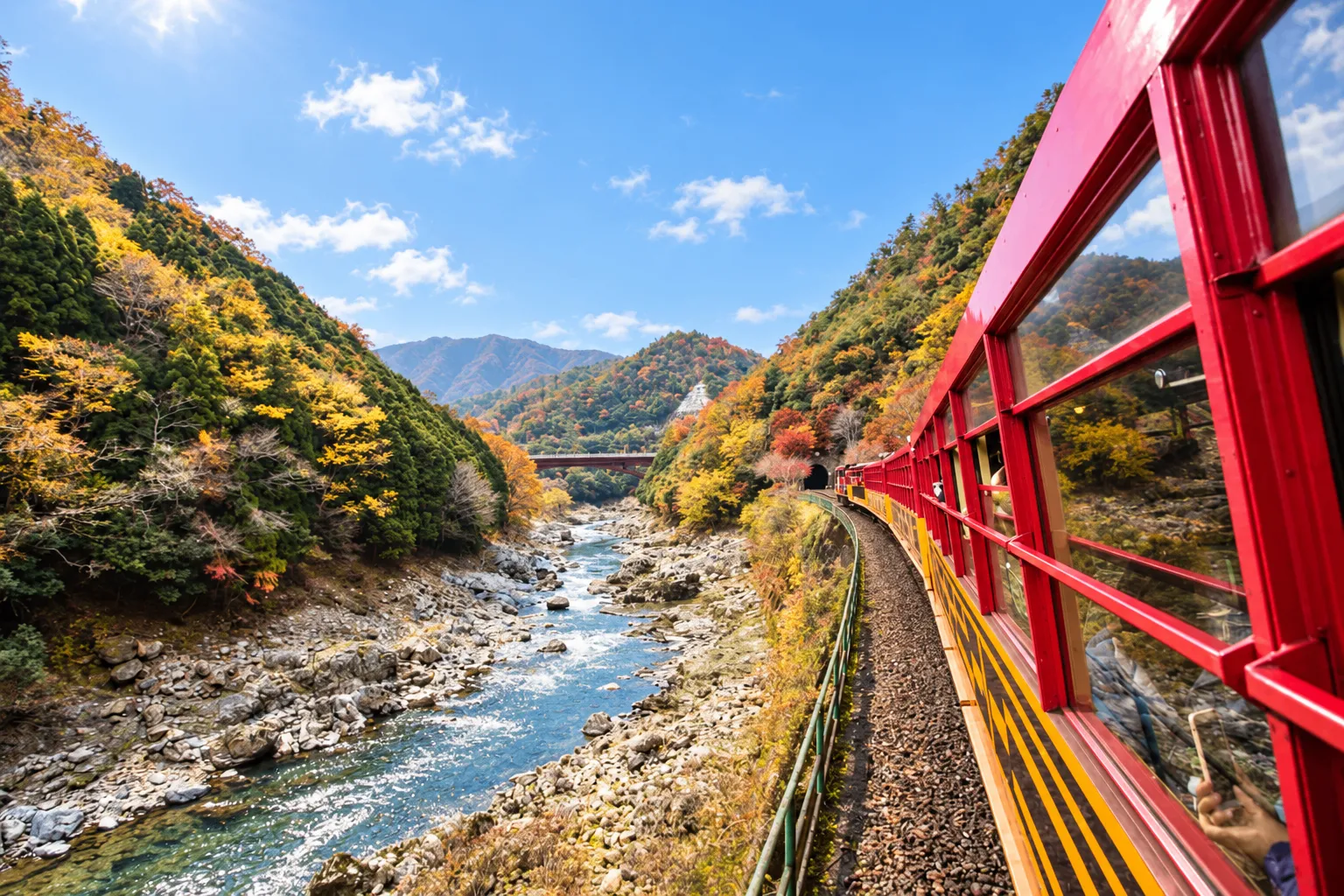
Most visitors reach Arashiyama by taking the quickest available train and stepping into one of Kyoto’s busiest sightseeing districts. The Sagano Romantic Train offers a more memorable alternative: travel beyond Arashiyama to Kameoka first, then return through the mountains aboard an old-fashioned sightseeing train.
It is deliberately the long way around. Yet as the train follows the Hozugawa River through tunnels, across bridges, and between steep forested slopes, the approach becomes part of the destination. About 25 minutes later, passengers leave the train inside the bamboo-covered hills, a few minutes from the most photographed section of the Arashiyama Bamboo Forest.
The route creates a growing sense of anticipation. By the time the train enters Arashiyama, it feels less like arriving at another suburban station and more like reaching a destination hidden beyond the gorge.
MapZamurai
Why Begin in Kameoka?
The Sagano Scenic Railway reuses approximately seven kilometers of railway through the Hozugawa gorge that was left outside the modern JR route. The sightseeing railway company was established in 1990, transforming the older alignment into one of western Kyoto’s most distinctive journeys.
For the approach described here, take the JR Sagano Line past Saga-Arashiyama to Umahori Station. The JR portion may be covered by an eligible JR Pass, but the privately operated sightseeing train requires its own ticket.
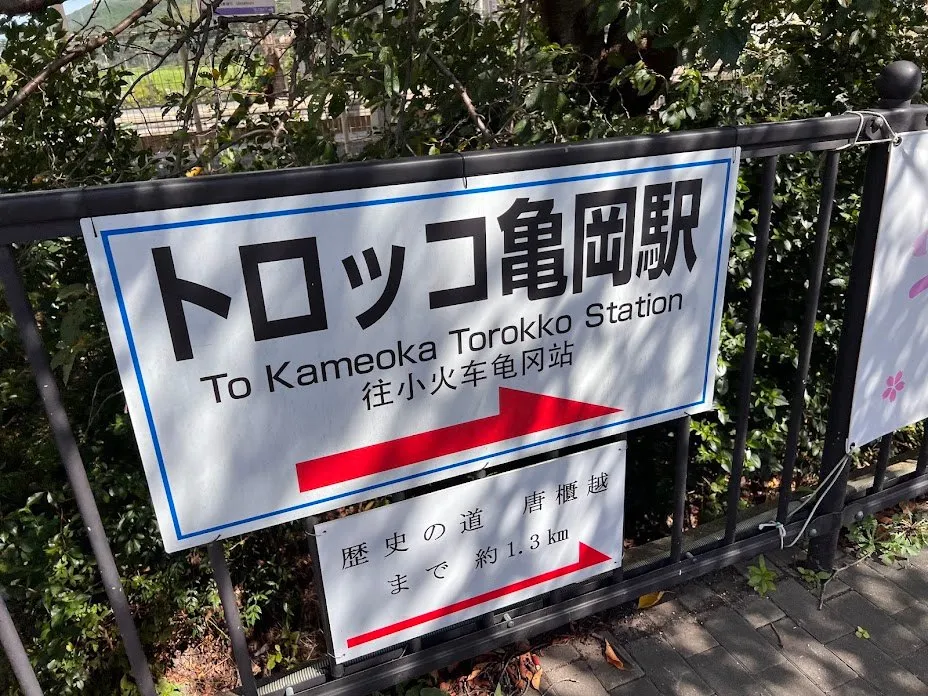
From Umahori, Torokko Kameoka Station is approximately a ten-minute walk. The route is flat, simple, and supported by directional signs and explanations along the way. There is little risk of confusing Torokko Kameoka with JR Kameoka Station: the correct JR stop for this transfer is Umahori.
The walk passes shops where drinks, ice cream, and snacks may be available. In Kyoto’s surprisingly hot early summer, stopping before reaching the station can be a better decision than arriving thirsty with minutes to spare.
Before Boarding at Torokko Kameoka
Torokko Kameoka feels more like a small visitor attraction than a conventional railway station. Its facilities include restrooms, an air-conditioned building, seating, ticket assistance, refreshments, souvenirs, and a café. Arriving with a little extra time allows passengers to cool down, buy a drink, and enjoy the rural surroundings without watching the clock.
Use the restroom before boarding because there are no toilets on the train. Large suitcases are best avoided even though luggage within the railway’s published size limits is permitted. A bulky bag complicates the transfer and distracts from an experience built around looking, listening, and taking photographs. Strollers must be folded and kept at the passenger’s seat. (See FAQ at bottom for more info.)
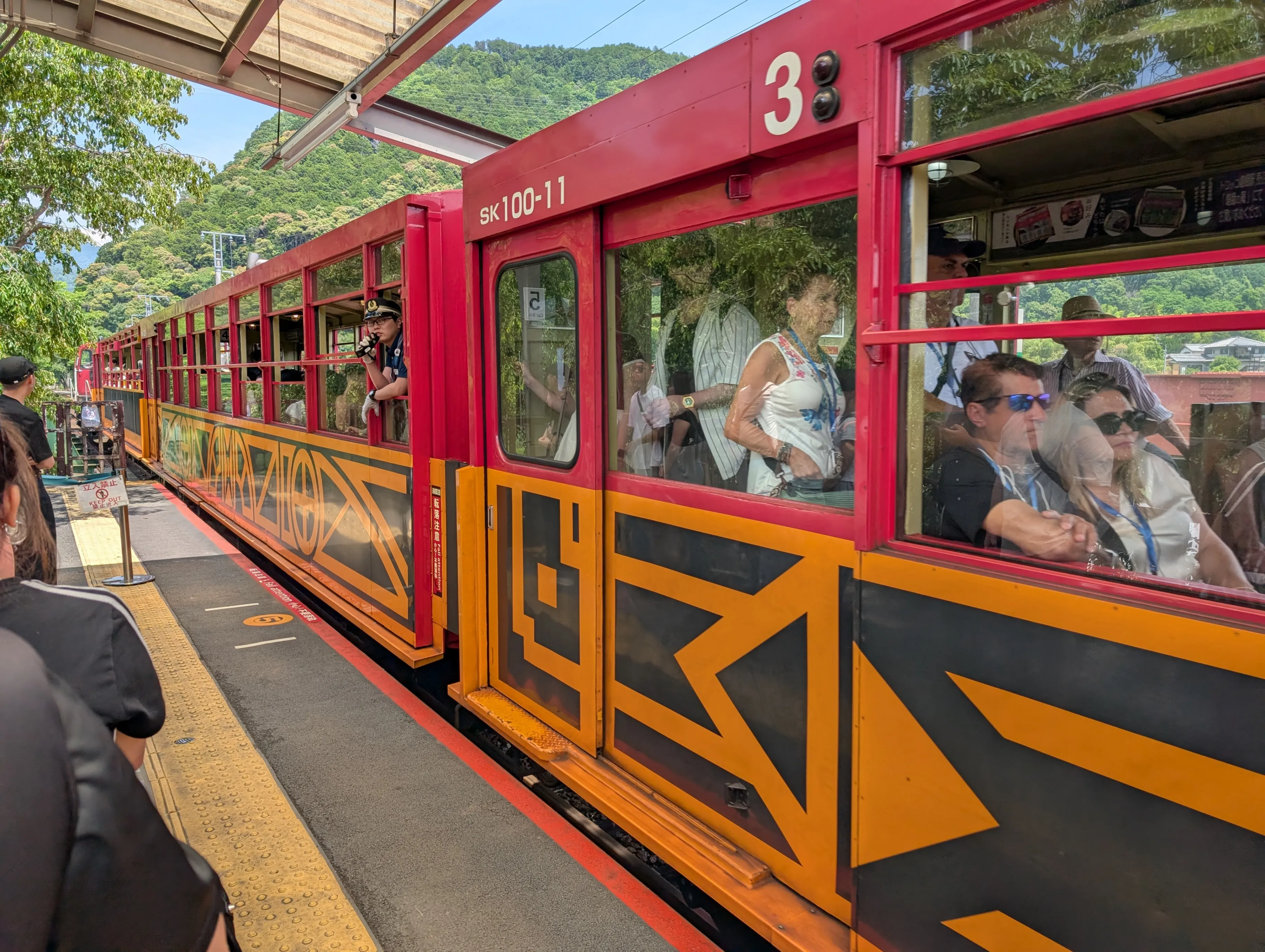
Passenger exchange is slower than on an ordinary Japanese commuter train, but there is no need to compete for a place: regular tickets include reserved seating. Those hoping for a photograph beside the train should act promptly after it arrives or take the photograph before boarding, as the turnaround at the station is brief.
MapZamurai
Choosing the Open-Air Car and the Best Seat
Cars 1–4 have windows that can be opened and four-person seating boxes. Car 5, called “The Rich,” has no window glass and incorporates open side panels and transparent sections in its floor and ceiling. All cars use sturdy wooden seats with flat backs and no cushioning—basic, but appropriate to the train’s nostalgic character.
Car 5 provides the most immersive version of the journey. The scenery is no longer something observed through glass: passengers feel the forest air, notice brief warmth when sunlight reaches into the gorge, smell the vegetation, and experience the sudden coolness of the tunnels. The tradeoff is exposure to the weather. Umbrellas cannot be used onboard, and the railway recommends rainwear if wet conditions are expected.
Online reservations allow passengers to select the train, car, and individual seat. When traveling from Kameoka toward Arashiyama, both sides receive river views because the Hozugawa meanders around the comparatively direct railway. The left side offers a slight photographic advantage, including the view at one particularly scenic river bend, but the right side is not a poor choice. Companions sharing a pair of seats can also alternate the window position.
Some seats face backward. Because the train moves gently, this need not diminish the experience; passengers can easily turn toward approaching scenery when necessary.
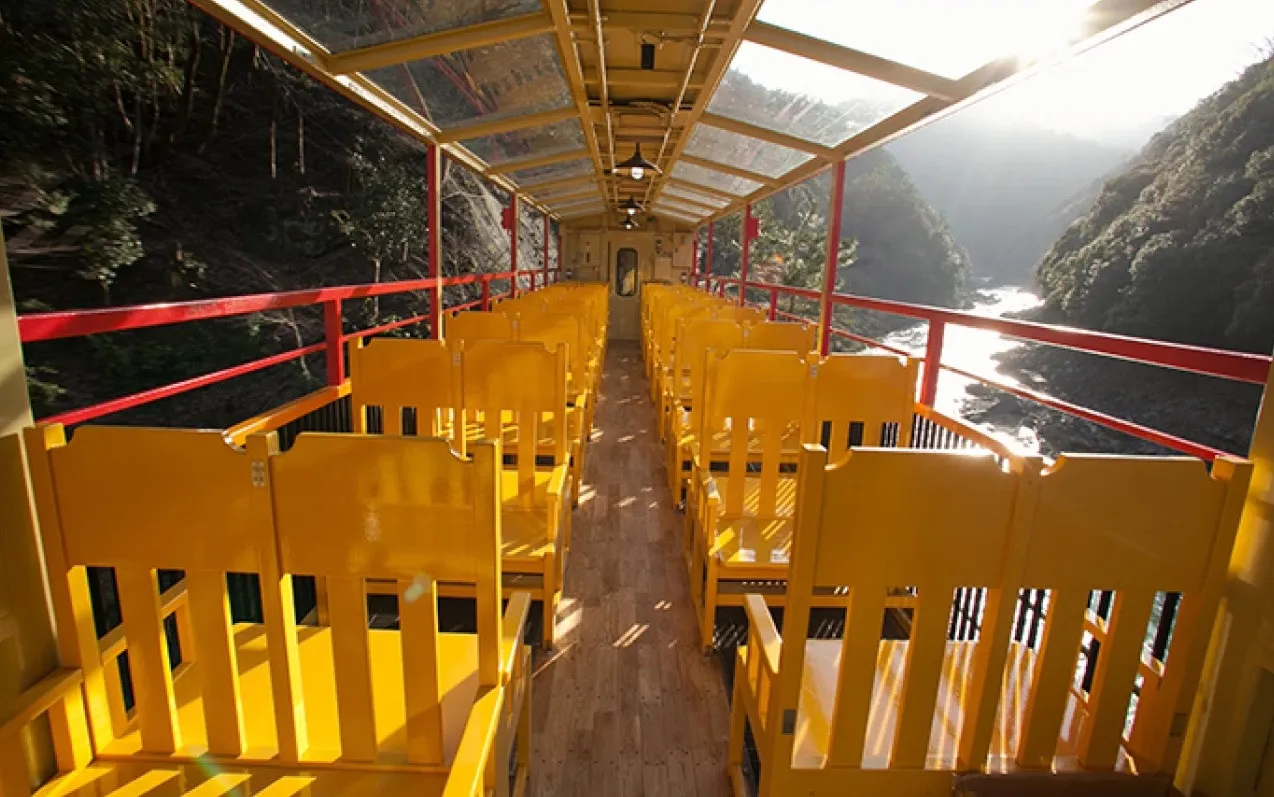
Through the Hozugawa Gorge
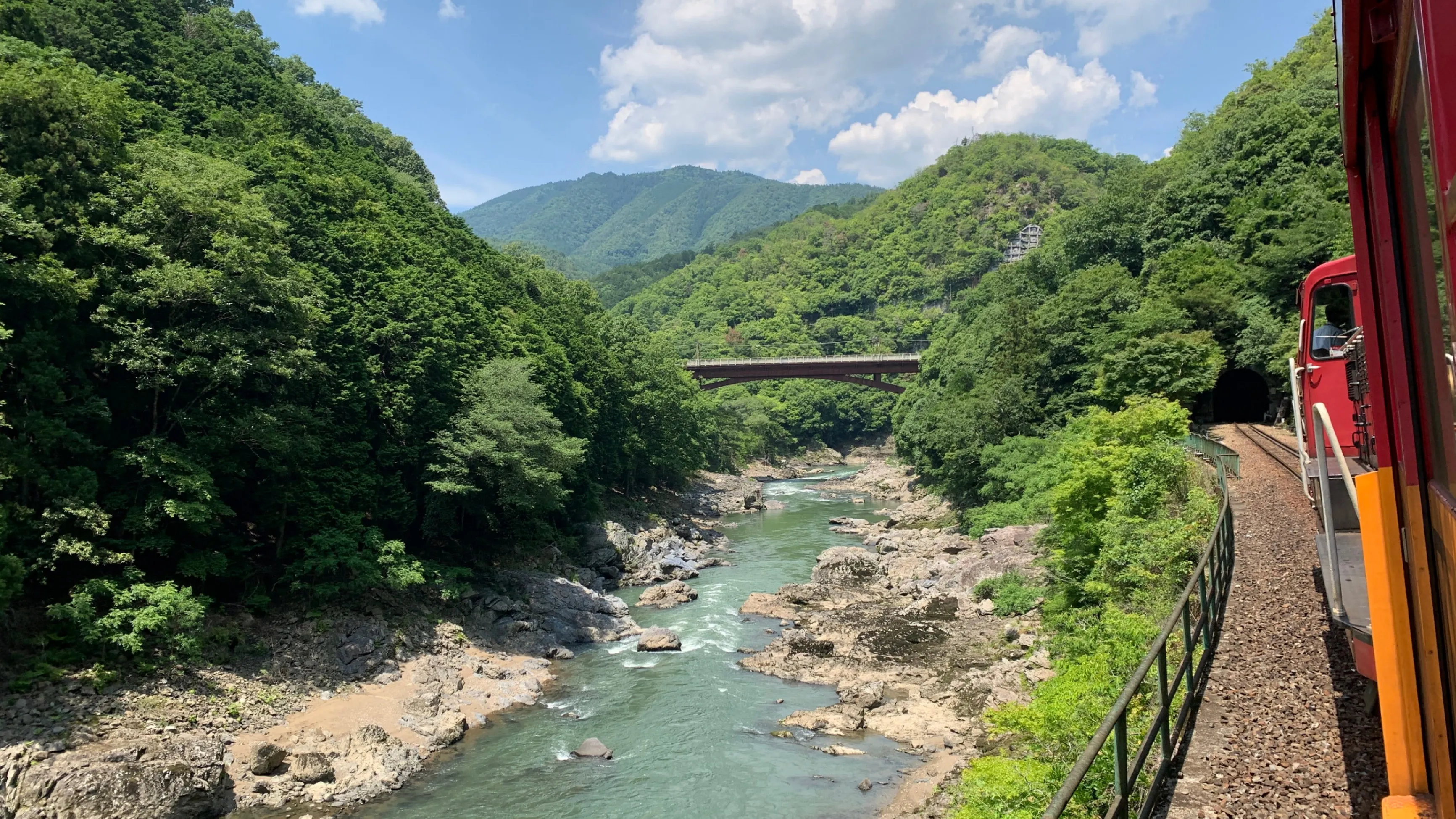
The journey develops as a sequence of contrasts. Dark tunnels suddenly open onto green slopes and pale blue-green water. Gentle river bends create natural compositions for photographs, while red bridges appear sharply against the surrounding forest. Boats and rafting groups may occasionally be visible below.
The train travels slowly enough to appreciate the landscape, and both sides receive changing views as the river curves through the valley. At an especially photogenic bend, an announcement may be followed by a brief pause or reduction in speed, allowing passengers to photograph the river and bridge from the left side. Such operational details can vary, so they should be treated as a welcome possibility rather than guaranteed choreography.
Saturday trains can be full without making the scenery difficult to enjoy. The atmosphere resembles a gentle theme-park ride—shared anticipation, cameras ready, and passengers helping one another take photographs—but without separating the route from its real railway history. An optional professional commemorative-photo service may also operate onboard, with no obligation to purchase.
Arriving Inside Arashiyama’s Bamboo Forest
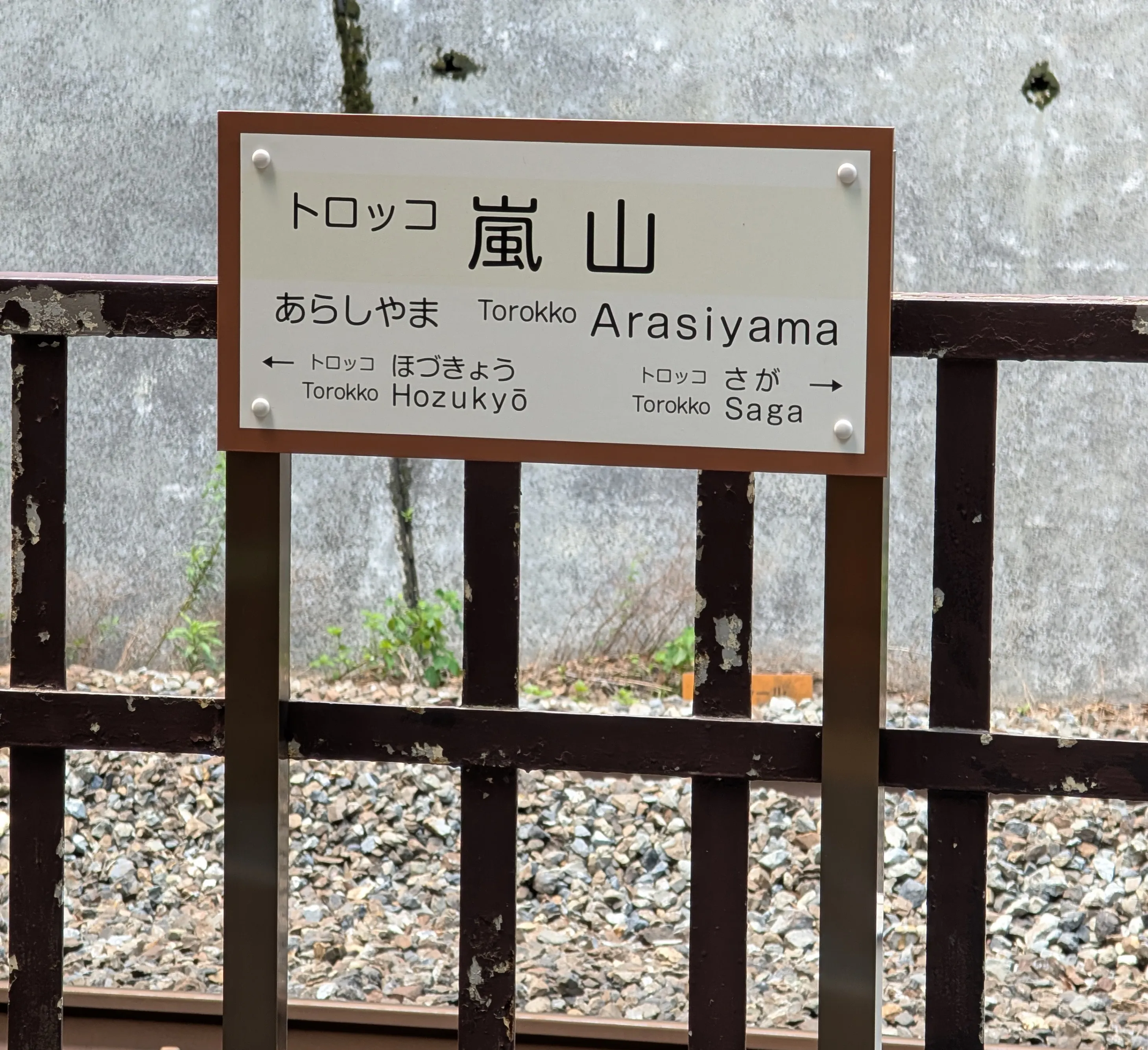
Torokko Arashiyama Station delivers on the promise of this route. Passengers walk along the platform and climb approximately 60 steps to trail level, emerging directly into the bamboo-covered hillside. The central and most frequently photographed part of the grove is only a few minutes away.
This is not the end of the outing. It is the beginning of an area that can comfortably fill the next five or six hours—and still leave much unseen. Beyond the busiest path, Nison-in Temple offers a quieter temple setting. Travelers continuing deeper into Saga can explore the stone memorials of Adashino Nenbutsu-ji. For a glimpse of how the atmosphere changes beyond central Arashiyama, follow this route into the quieter surroundings of Adashino and Kiyotaki.
Closer to the river, Tenryū-ji, Togetsukyō Bridge, and the hillside Arashiyama Monkey Park provide very different ways to continue the day. The goal need not be checking off everything. Arashiyama rewards choosing the places that genuinely spark interest and allowing time to experience them.
MapZamurai
Tickets, Timing, and Accessibility
Tickets become available through the official Sagano Romantic Train reservation system from midnight Japan time one month before travel. Advance booking is strongly recommended for weekends, cherry-blossom season, and the autumn-color period. The official website should always be checked for current fares, timetables, operating dates, and weather-related information.
A train around midday can still leave approximately five hours for walking, lunch, temples, and the riverfront before departing Arashiyama around 6:00 p.m. Travelers wanting a full day should reserve an earlier service. Riding in the opposite direction can provide a scenic finale, but the train should be timed while sufficient daylight remains.
The train has two wheelchair spaces, and staff can provide a boarding ramp when arranged in advance. However, Torokko Arashiyama Station is not barrier-free: approximately 60 stairs separate the platform from the exit, with no elevator. The railway recommends Torokko Saga Station for wheelchair users and travelers who find stairs difficult. Accessibility needs should therefore be discussed with the railway before purchasing the complete route.
Arashiyama has far more to offer than any single itinerary can contain. Choose what excites you and continue exploring with Find it. Read it. Visit.
Frequently Asked Questions
Which side of the Sagano Romantic Train is best from Kameoka to Arashiyama?
Both sides receive good river views because the Hozugawa bends repeatedly around the railway. The left side has a slight advantage for some prominent views, including a scenic river bend and bridge, but passengers on the right will not miss the entire landscape.
Is Car 5, “The Rich,” worth booking?
Car 5 is the best choice for travelers who want the most direct sensory experience. Its open sides allow passengers to feel the breeze, notice the scent of the forest, and photograph the scenery without window reflections. However, it is exposed to rain and changing temperatures. Umbrellas cannot be used onboard, so passengers should bring rainwear when necessary.
Does the JR Pass cover the Sagano Romantic Train?
No. An eligible JR Pass may cover the JR journey to Umahori Station, but the Sagano Scenic Railway is separately operated and requires its own ticket.
Can wheelchair users and passengers with service dogs ride the train?
The train has two wheelchair spaces, and boarding ramps can be arranged in advance. However, Torokko Arashiyama Station has approximately 60 stairs and no elevator. Wheelchair users should contact the railway before booking and may need to use Torokko Saga Station instead. Guide dogs and other recognized service dogs are permitted, but passengers should notify station staff in advance. Check the railway’s accessibility information when planning the journey.
Can passengers bring strollers, luggage, bicycles, or pets?
Strollers are permitted but must be folded and kept at the passenger’s seat. Suitcases are allowed within the railway’s published size limits, although traveling without bulky luggage makes the journey more comfortable. Bicycles are not permitted, including folded bicycles in carrying bags. Small pets may travel inside an approved pet case for an additional fee, but pet carts are not allowed. Check the railway’s official seating information for current dimensions, fees, and conditions.