
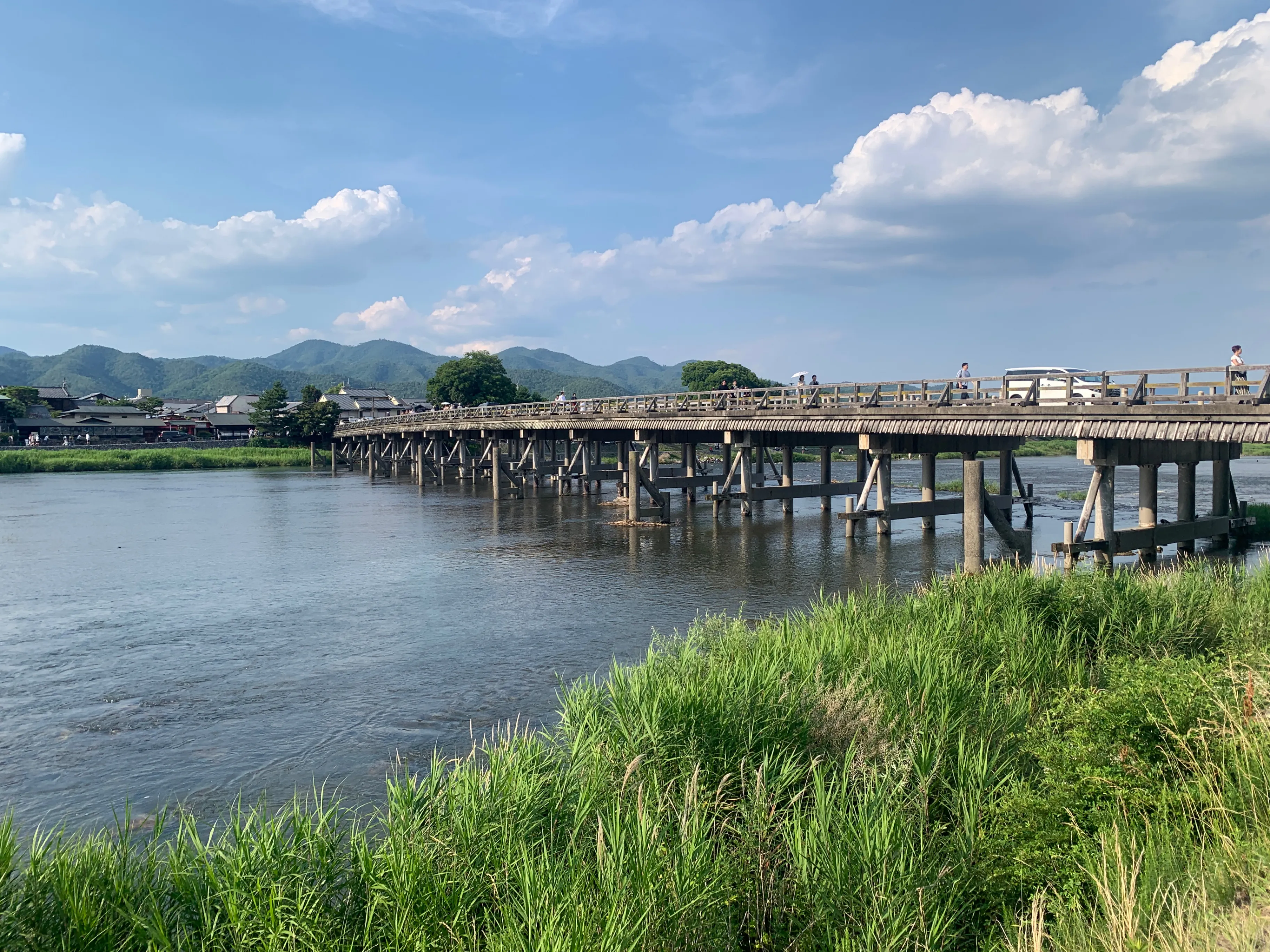
For many visitors, Arashiyama means bamboo. But before or after the famous grove, there is another simple route worth slowing down for: the short walk between Togetsukyo Bridge and Randen Arashiyama Station.
The distance is small, but the scenery changes quickly. At the river, the mountains form the backdrop to boats, flowing water, and the long profile of the bridge. Head toward the station and the atmosphere becomes busier, with restaurants, souvenir shops, rickshaws, and visitors moving between Arashiyama’s major sights. Then, inside and around the station, hundreds of patterned pillars create the colorful Kimono Forest.
This is not a route that needs a complicated itinerary. It works best when you allow yourself to wander, stop at the river, look inside the shops, and take in the small things along the way.
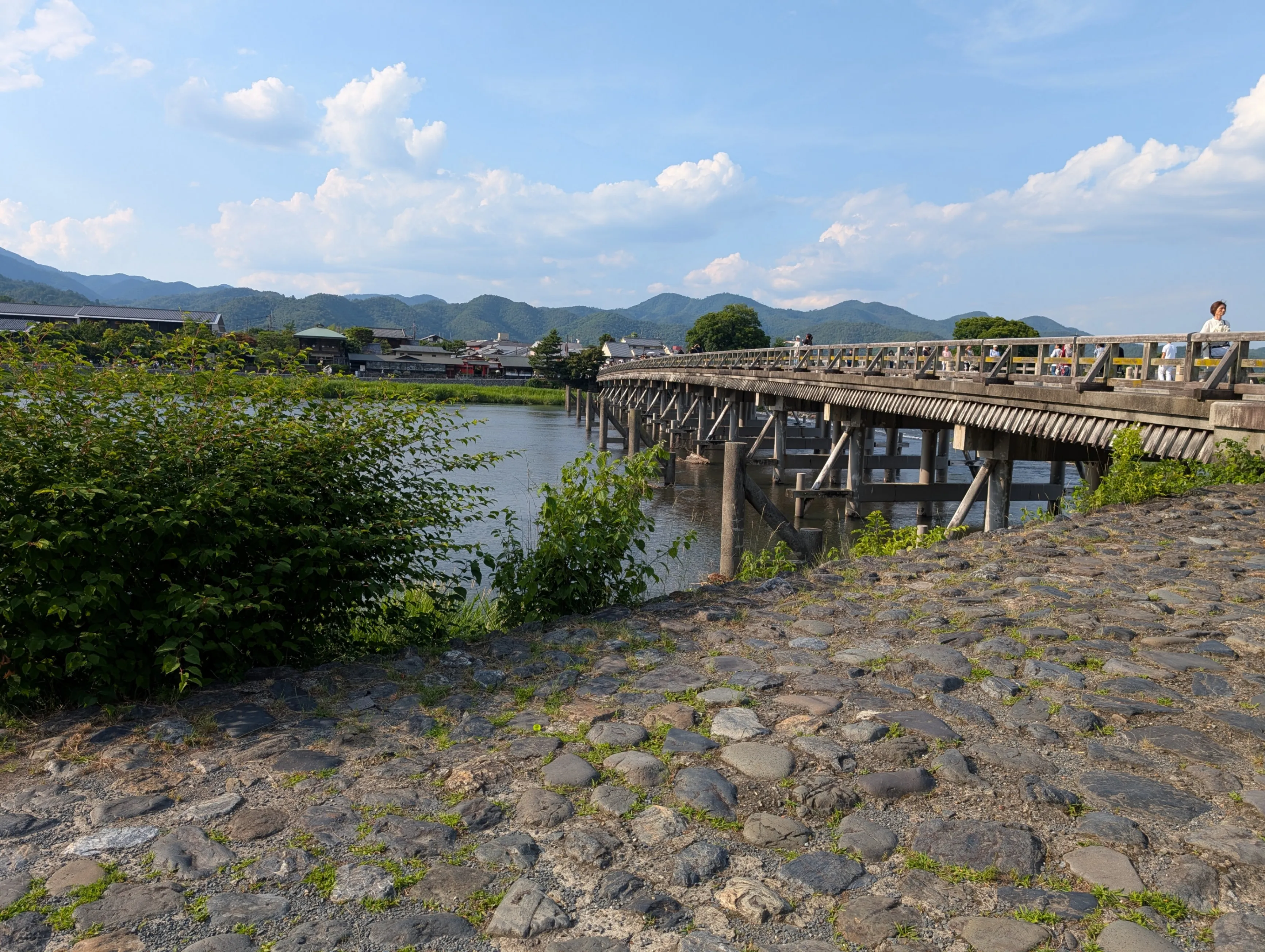
Photo by Angie Lewis
The View That Defines Arashiyama
Togetsukyo — literally the “Moon Crossing Bridge” — has become one of the defining images of Arashiyama. A bridge was first built in this area in the ninth century, although it stood farther upstream. The present bridge was completed in 1934.
Its poetic name is traditionally connected with Emperor Kameyama, who looked at the moon moving above the bridge and remarked that it appeared as though the moon itself were crossing it.
The history is interesting, but the landscape is what makes the bridge memorable today. The broad river, low bridge, and forested slopes behind it form a scene that changes dramatically with the seasons.
One particularly good place to appreciate that scene is on the south side of the river, just west of the bridge. There is a more open area here with benches, giving you room to step away from the flow of pedestrians and see the bridge against the mountain.
The southeast side is also worth exploring. From here, you can frame the bridge with the river and Arashiyama behind it rather than simply photographing the bridge from one end.
For another look at the scenery around the bridge, watch this Togetsukyo Bridge video on MapZamurai.
Cross the Bridge Slowly
Togetsukyo is not just something to photograph from the riverbank. Walking across it is part of the experience.
The crossing is broad and easy, with wide railings and views opening in both directions. Traffic also uses the bridge, but vehicles generally move slowly through this busy sightseeing area.
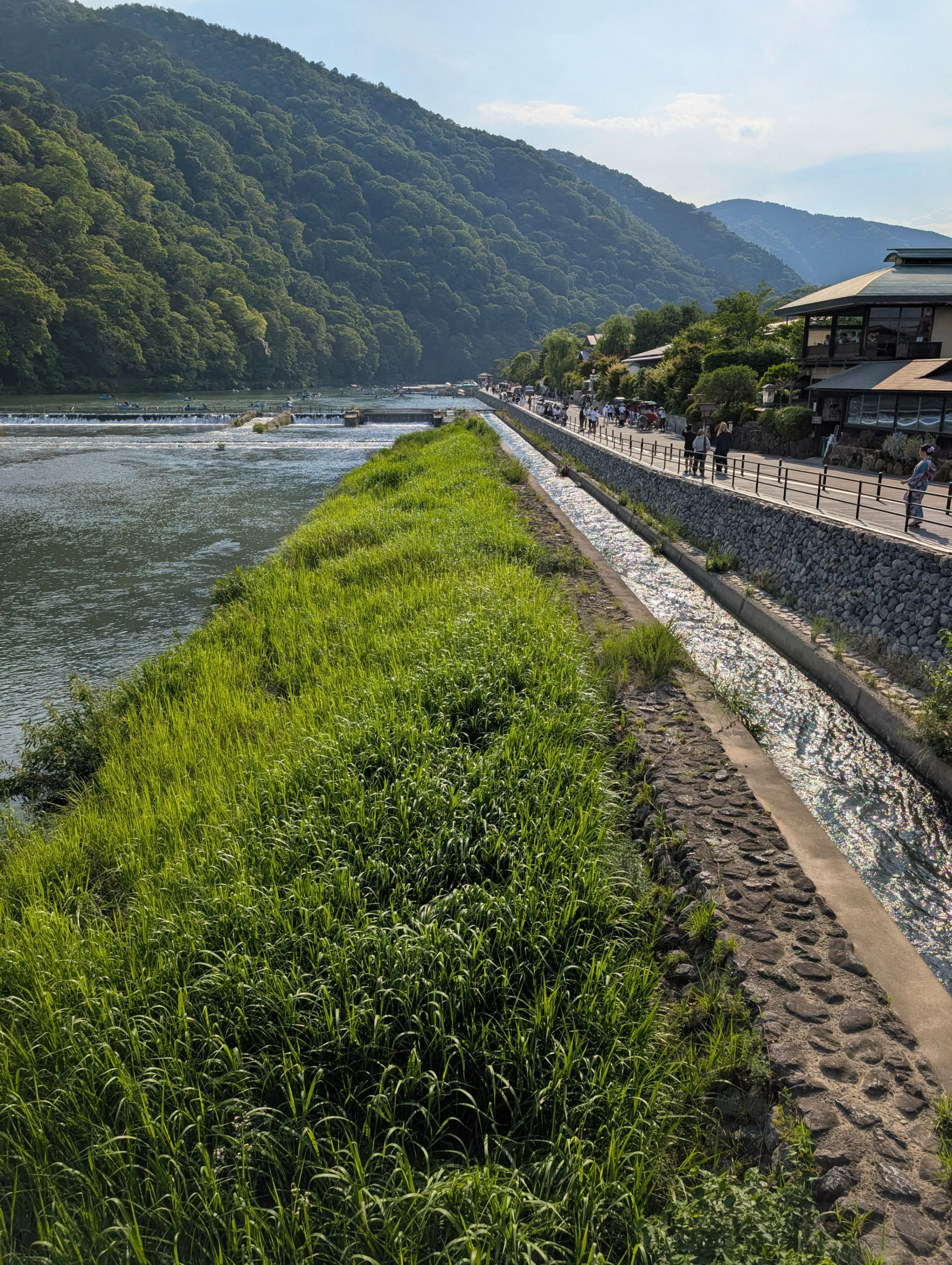
Look upstream for boats and the mountains closing around the river. Downstream, the river widens and a weir stretches across much of the view. Depending on the season and time of day, sightseeing boats and small rental boats may add movement to the water.
There is no reason to hurry. The bridge is long enough for the perspective to change as you cross, but short enough that stopping on both sides of the river is easy.
The core riverside area is also relatively friendly for travelers using wheelchairs, strollers, or other wheeled mobility. The route across the bridge and between the river and Randen station is largely flat and straightforward, although individual shops and attractions may have their own steps or access limitations.
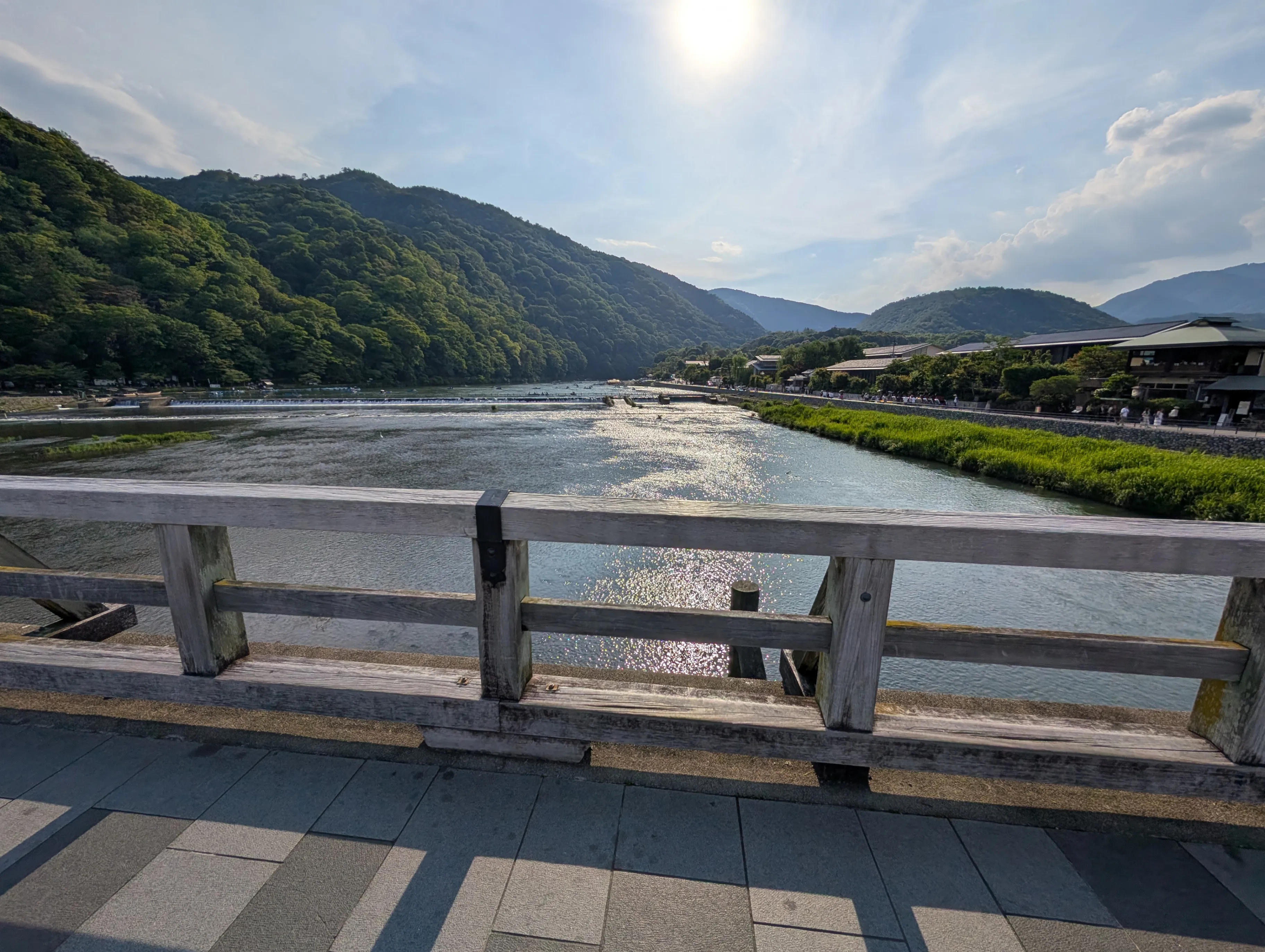
Photo by Angie Lewis
From the River to Randen Arashiyama Station
From the north end of Togetsukyo Bridge, Randen Arashiyama Station is only a short walk away. Even so, this stretch is worth treating as part of the visit rather than simply a route between attractions.
The street can be crowded, particularly at popular times and during peak seasons, but it is flat and easy to walk. Restaurants and shops line both sides, and rickshaws are a common sight moving through the area.
Part of the fun is simply going into the souvenir shops and seeing what turns up. Alongside the predictable Kyoto gifts are local sweets, crafts, accessories, hand towels, and plenty of things you may not have been specifically looking for. Some shops allow photography while others ask visitors not to take pictures, so watch for signs before pulling out a camera.
In summer, use whatever shade you can find and take breaks when needed. Kyoto can be surprisingly hot and humid, and the heat feels considerably stronger when you have been walking all day or are carrying a backpack. A hat and water are worth having with you.
If you have come from the riverside or another place where your feet became wet, dry them properly before boarding a train. Randen Arashiyama Station is only three stops from some nearby destinations, but good train etiquette still matters — and wet station or train floors can also become slippery.
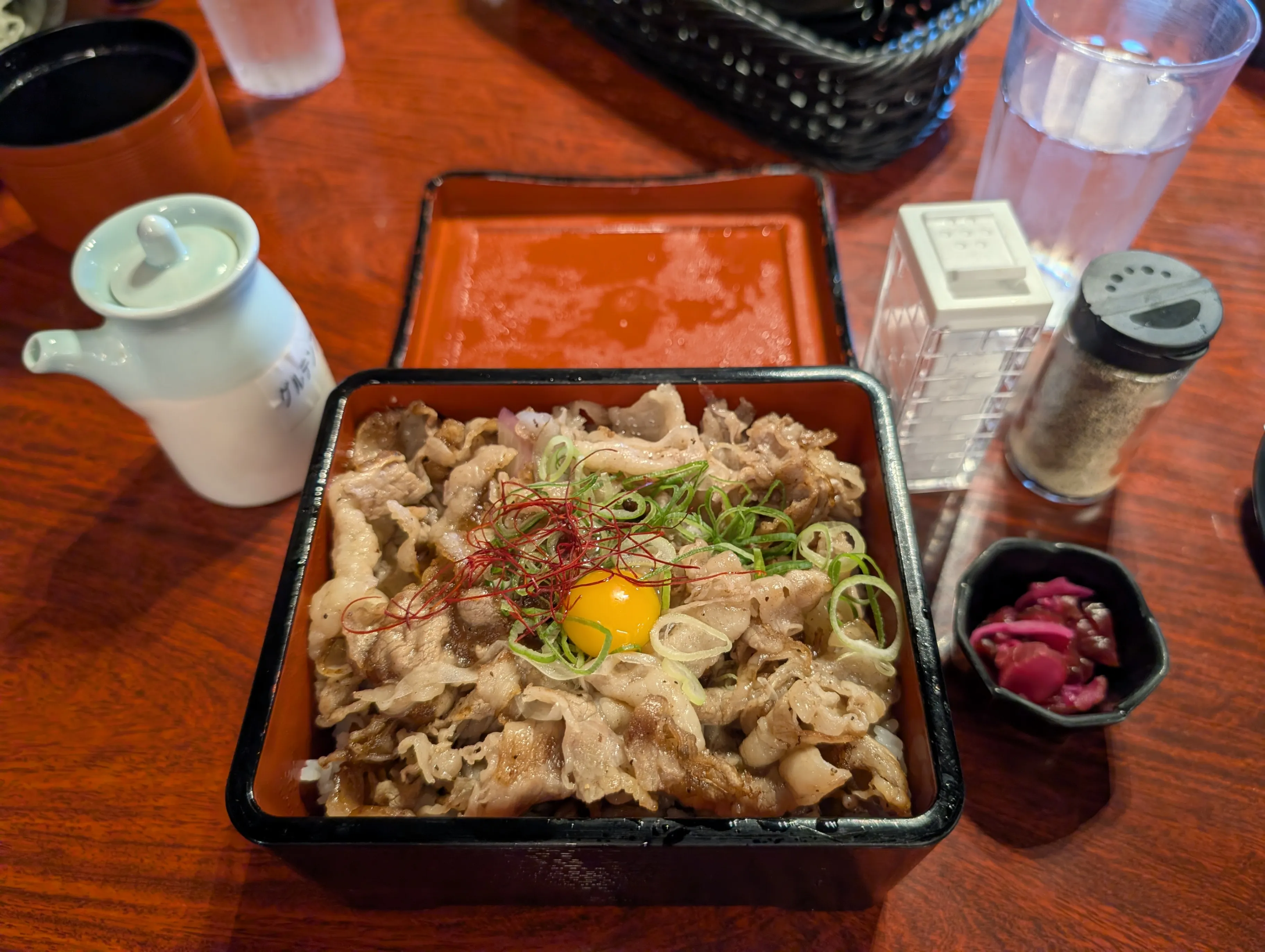
Photos by Angie Lewis
A Forest Made from Kimono
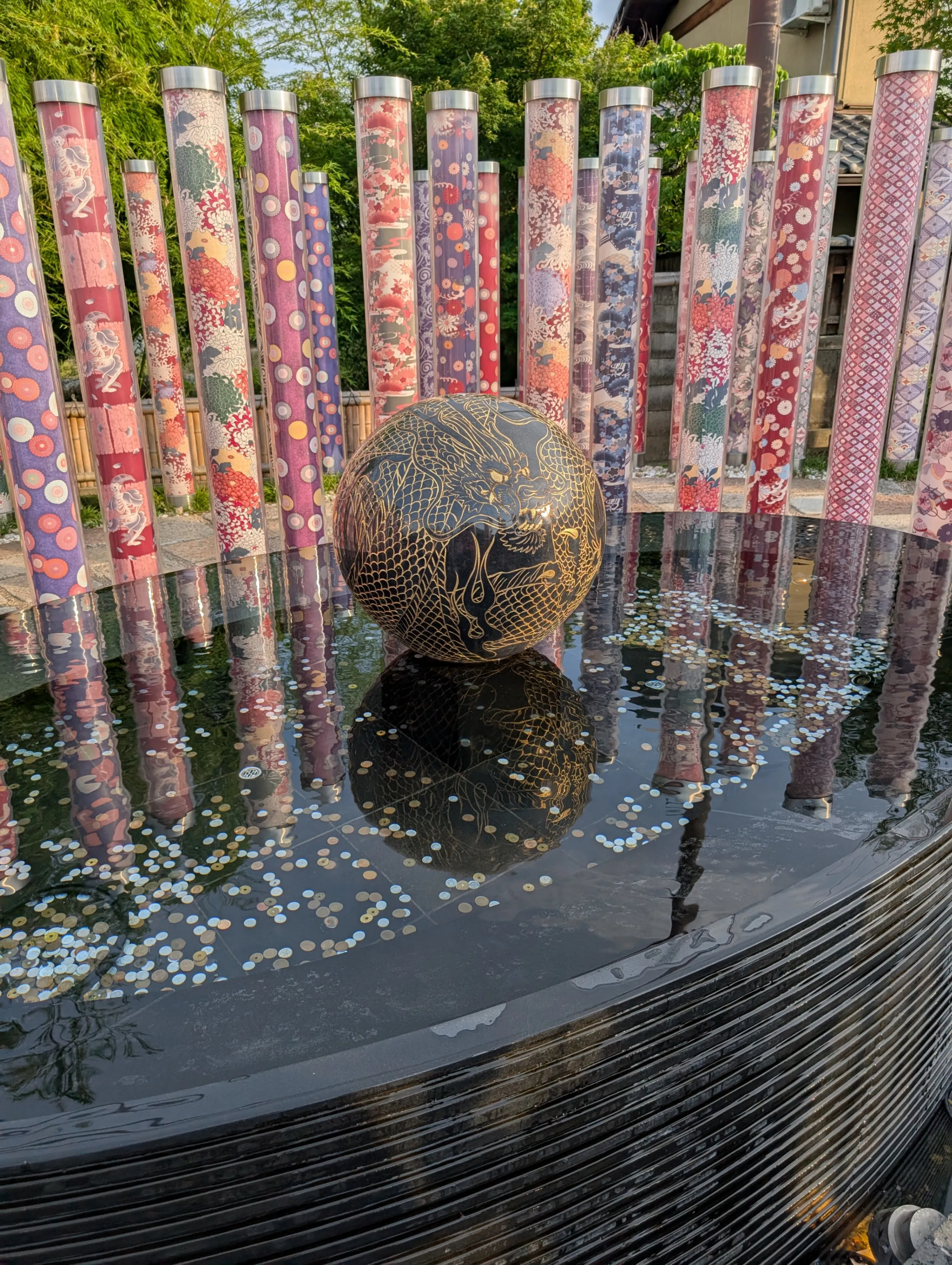
Randen Arashiyama Station has an attraction of its own: the Kimono Forest.
Around 600 transparent pillars stand around the station and tracks, each displaying fabric decorated with Kyo-yuzen patterns. Kyo-yuzen is a traditional Kyoto dyeing technique used for kimono, known for detailed designs and rich combinations of color.
Walking among the pillars feels very different from walking through Arashiyama’s famous bamboo. Instead of green bamboo rising around a path, rows of patterned cylinders create a man-made “forest” built from Kyoto textile design.
During the day, you can stop to look at the individual patterns and colors. After dark, the pillars are illuminated from within, transforming the station into a particularly photogenic final stop for an Arashiyama visit.
Because the installation is incorporated into the station itself, you do not need to set aside a large block of time. If you are already using the Randen, it is an easy place to explore before boarding or after arriving.
Connect the Bridge to a Bigger Arashiyama Day
Togetsukyo Bridge and Randen Arashiyama Station can be visited quickly, but they work particularly well as the center of a longer day.
From the station, the Bamboo Grove and Tenryu-ji are within easy walking distance. Our guide to Arashiyama Bamboo Grove and Tenryu-ji: From Bamboo Paths to Zen Gardens shows how to combine the famous bamboo paths with the temple’s much more spacious gardens.
Another option is to approach Arashiyama from the opposite direction aboard the Sagano Scenic Railway. Riding from Torokko Kameoka toward Arashiyama turns the journey itself into part of the sightseeing, following the river through the mountains before you arrive near the Bamboo Grove.
If you want to continue beyond Arashiyama’s busiest sights, Nison-in Temple offers another side of Sagano, farther from the heaviest crowds.
Travelers who would rather explore with someone who knows the area can also consider Arashiyama Bamboo & “Must See” Gardens with an Amazing Guide, which connects several of the district’s major sights as a guided experience.
Whether Togetsukyo is your starting point, your final stop, or simply somewhere you pass in the middle of the day, it is worth resisting the temptation to treat it as a quick photo opportunity. Arashiyama makes more sense when its pieces are connected: river, bridge, mountains, temples, bamboo, streets, and trains are all within walking distance of one another.
Find it. Read it. Visit.
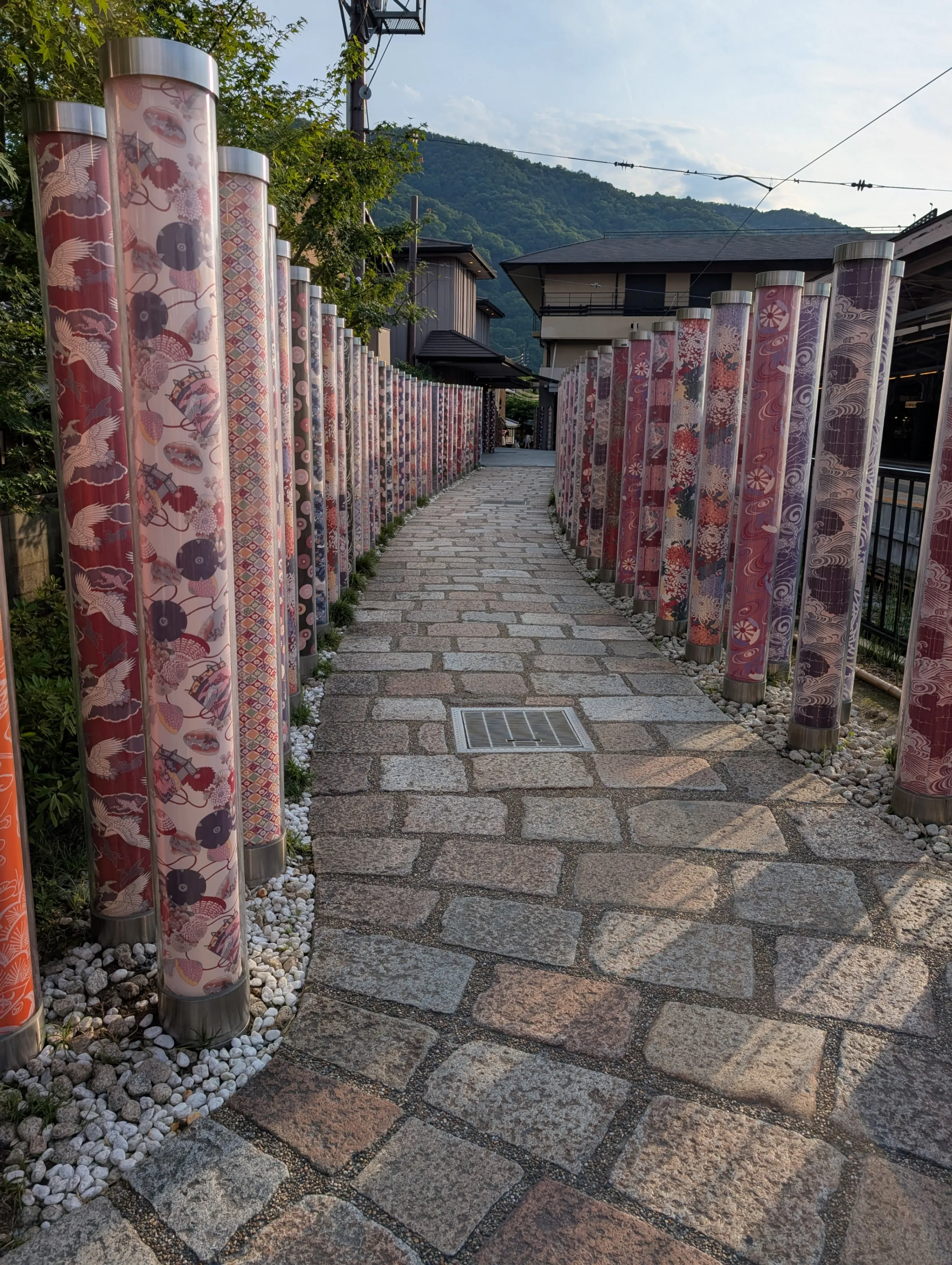
Photo by Angie Lewis
FAQ
How long should I allow for Togetsukyo Bridge and Randen Arashiyama Station?
If you are only walking between the bridge and station, the distance is short. Allow around 30–60 minutes if you want to cross the bridge, stop for photos, browse some shops, and explore the Kimono Forest. Add more time for food or riverside stops.
Where is the best place to photograph Togetsukyo Bridge?
The south side of the river just west of the bridge offers an excellent open view, with benches and enough distance to place the bridge against the mountains. The southeast side also gives attractive views looking toward the bridge and Arashiyama.
Is the walk difficult?
No. The main route between Togetsukyo Bridge and Randen Arashiyama Station is flat and easy. Crowds can make it slower at busy times, but the physical walk itself is straightforward.
Is the area suitable for wheelchairs and strollers?
The bridge, riverside, and main route toward Randen Arashiyama Station are generally flat and manageable for wheeled travelers. Individual shops and attractions can have steps or other barriers, so accessibility varies once you leave the main route.
When is the best time to see the Kimono Forest?
The patterns are easy to appreciate during daylight, but the atmosphere changes after dark when the pillars are illuminated from within. If your schedule allows it, arriving around dusk lets you experience both.