
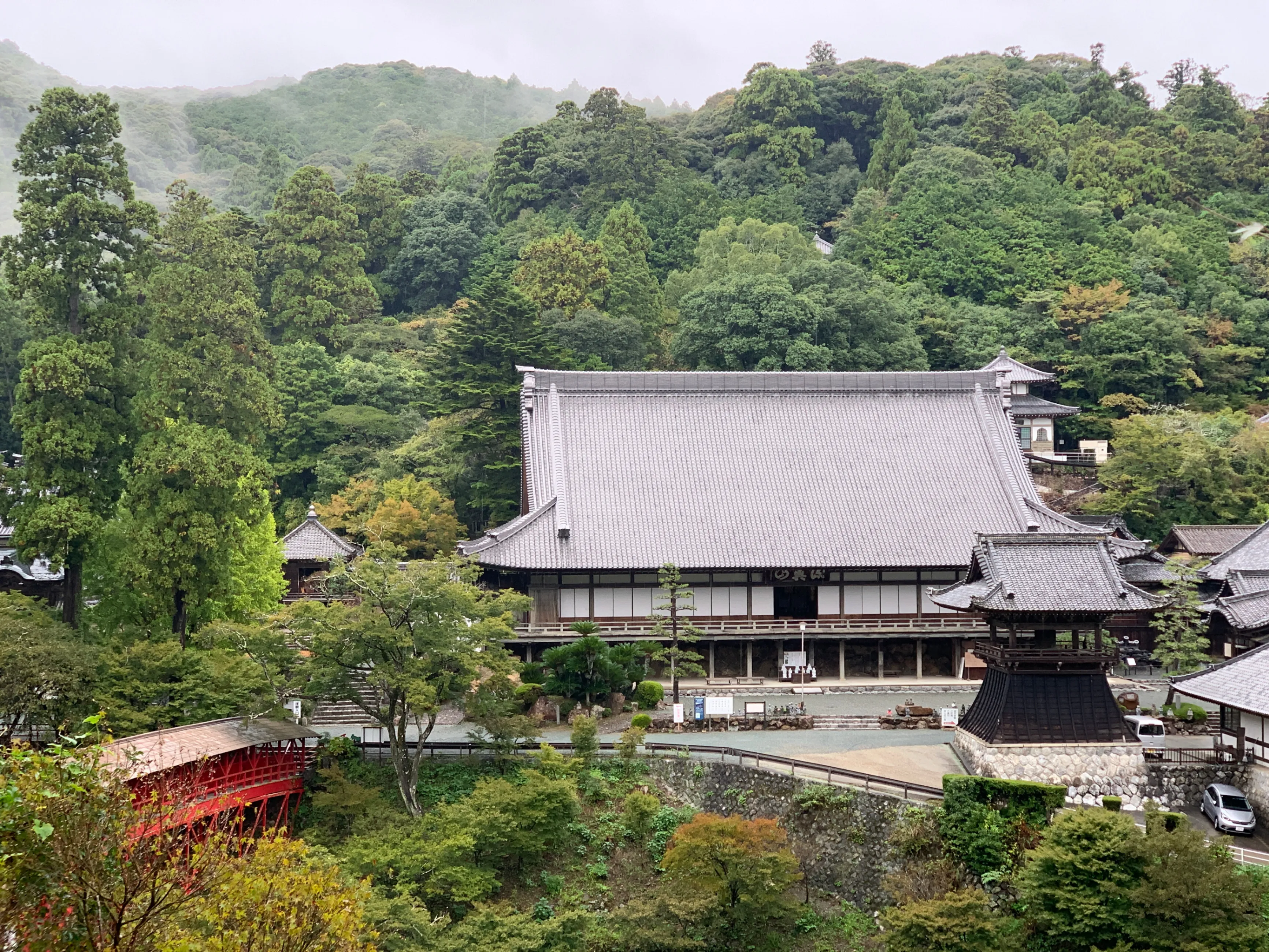
Long before Houkouji Temple comes into view, the mountains begin to establish its atmosphere. Forested ridges rise around the narrow valley, while tall trees conceal the buildings below. On a rainy autumn day, clouds drift between the slopes, and the distant rumble of rushing water carries through the forest.
From the upper parking area, the first landmark is a three-story pagoda. A path then leads downhill toward the main temple complex, gradually revealing rooftops among the trees, bright red bridges, and a stream tumbling through the valley. Rather than appearing all at once, Houkouji seems to emerge from the landscape as visitors explore.
Located in the Okuyama area of northern Hamamatsu, Shizuoka Prefecture, Houkouji is both an important Zen Buddhist temple and a rewarding destination for travelers interested in nature, architecture, and quieter corners of Japan.
The grounds are beautiful in sunshine, but rain gives them a different character. Waterfalls become more dramatic, mist gathers around the mountains, and the sound of flowing water accompanies the walk. Even a relatively short visit can feel like an escape into a world far removed from the surrounding roads and towns.
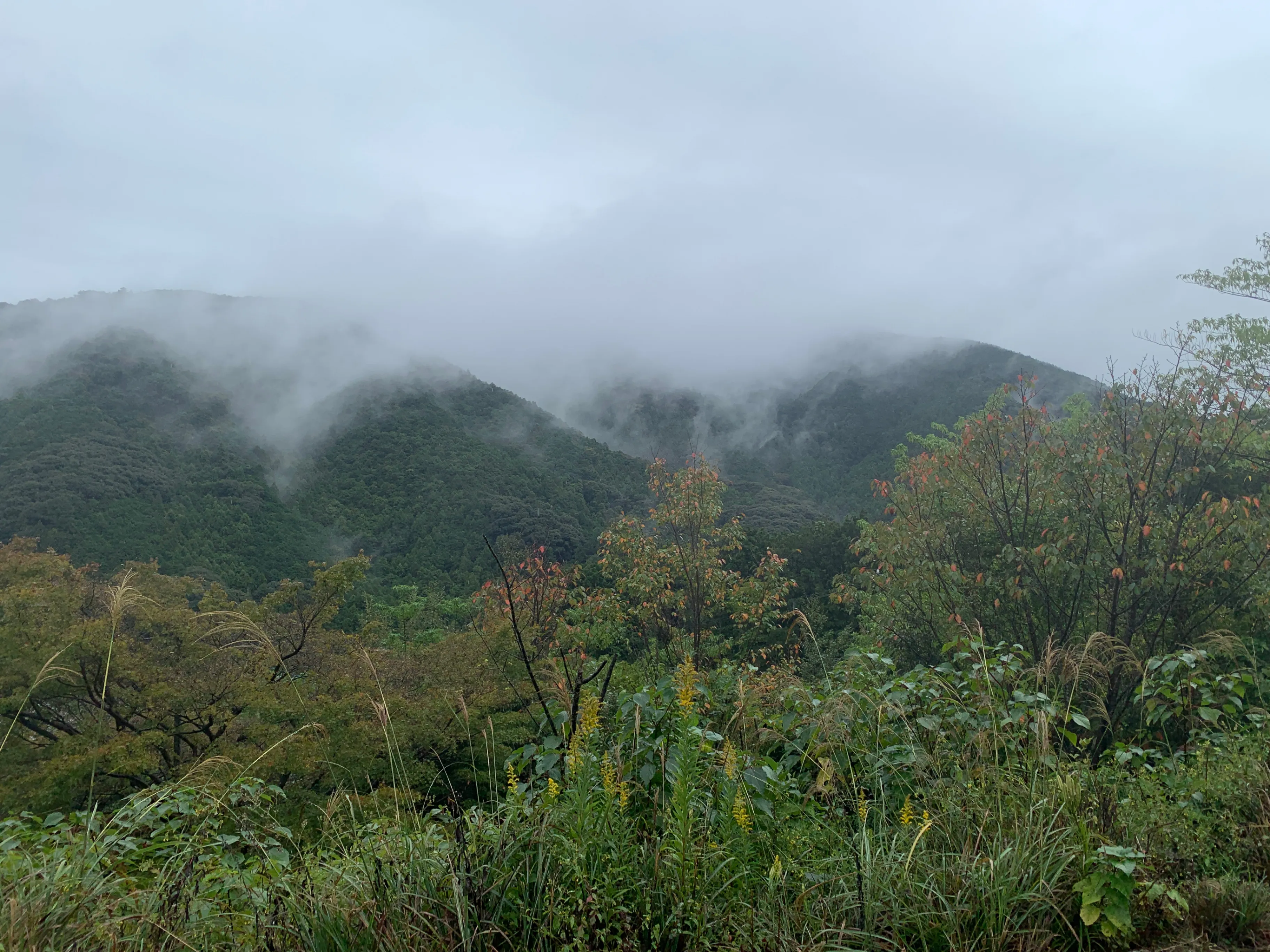
Photo: MapZamurai Staff
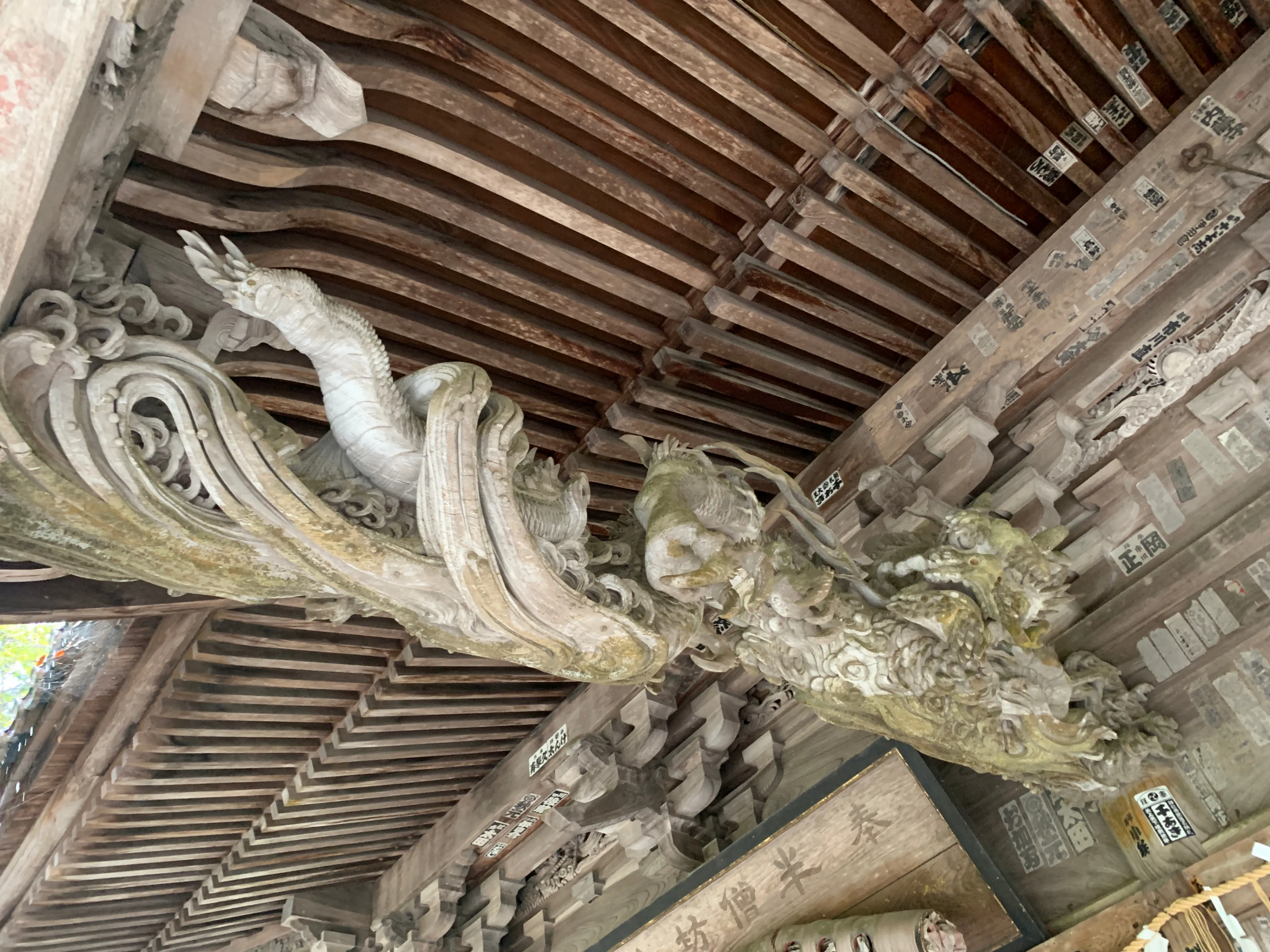
Photo: MapZamurai Staff
A Zen Temple with More Than 650 Years of History
Houkouji was established in 1371, when the local lord Okuyama Tomofuji invited the Zen monk Mumon Gensen to found a temple in this secluded valley. Mumon Gensen was a son of Emperor Go-Daigo, giving the temple an unusual connection to Japan's imperial history.
Today, Houkouji serves as the head temple of the Houkouji school of Rinzai Zen Buddhism, one of the major traditions of Japanese Zen. Its grounds contain numerous cultural treasures, including a nationally designated Important Cultural Property and 22 nationally registered historic buildings.
Although the temple's origins reach back to the medieval period, many of the present buildings are younger. Fires repeatedly damaged the complex, including a major blaze in 1881, after which it was rebuilt.
The substantial main hall, traditional roofs, and intricate wooden carvings reward close inspection. Look upward beneath the eaves, where elaborate sculptural details can easily be missed while concentrating on the path ahead.
Yet Houkouji's appeal is not limited to individual buildings. The architecture feels inseparable from the forest, steep hillsides, and flowing water around it.
Travelers interested in the region's Zen heritage may also enjoy Ryotan-ji Temple, another historic temple in northern Hamamatsu, particularly celebrated for its traditional Japanese garden.
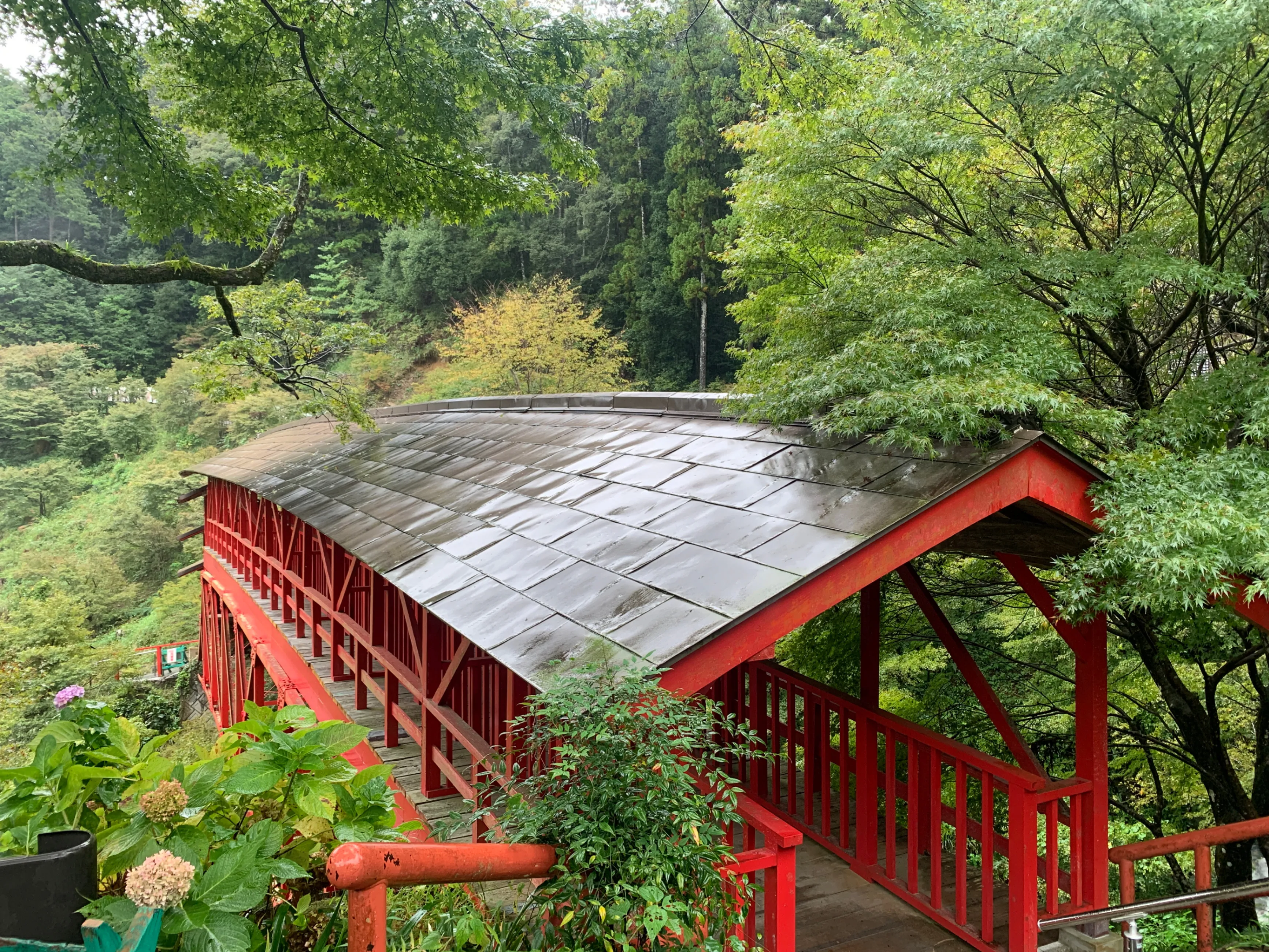
Photo: MapZamurai Staff
From the Pagoda to the Red Bridge
There are two main approaches to Houkouji. The lower parking area near Kuromon Gate follows a more traditional uphill route through the forest, while the upper parking area places visitors close to the three-story pagoda and provides a convenient starting point for exploring the main complex.
The pagoda, built in 1923, stands above the temple grounds. From here, a downhill walk offers glimpses of the buildings below, framed by the surrounding mountains. The elevated perspective is especially rewarding before the path descends into the trees.
As the route continues downhill, the temple gradually reveals itself. Buildings appear between towering trees, and the surrounding slopes create a sense of separation from the outside world. A striking red bridge adds color to the landscape, while a few smaller bridges provide passage across the stream and between different parts of the grounds.
On wet days, the water can be heard well before it comes fully into view. The distant rumble grows louder as the path approaches the valley floor, eventually revealing water cascading over rocks beneath the surrounding foliage.
Take time to stop at viewpoints along the way. The changing perspectives reveal different combinations of temple roofs, wooded hillsides, and flowing water. Rather than any single landmark, it is the experience of moving through this secluded mountain setting that makes the walk so memorable.
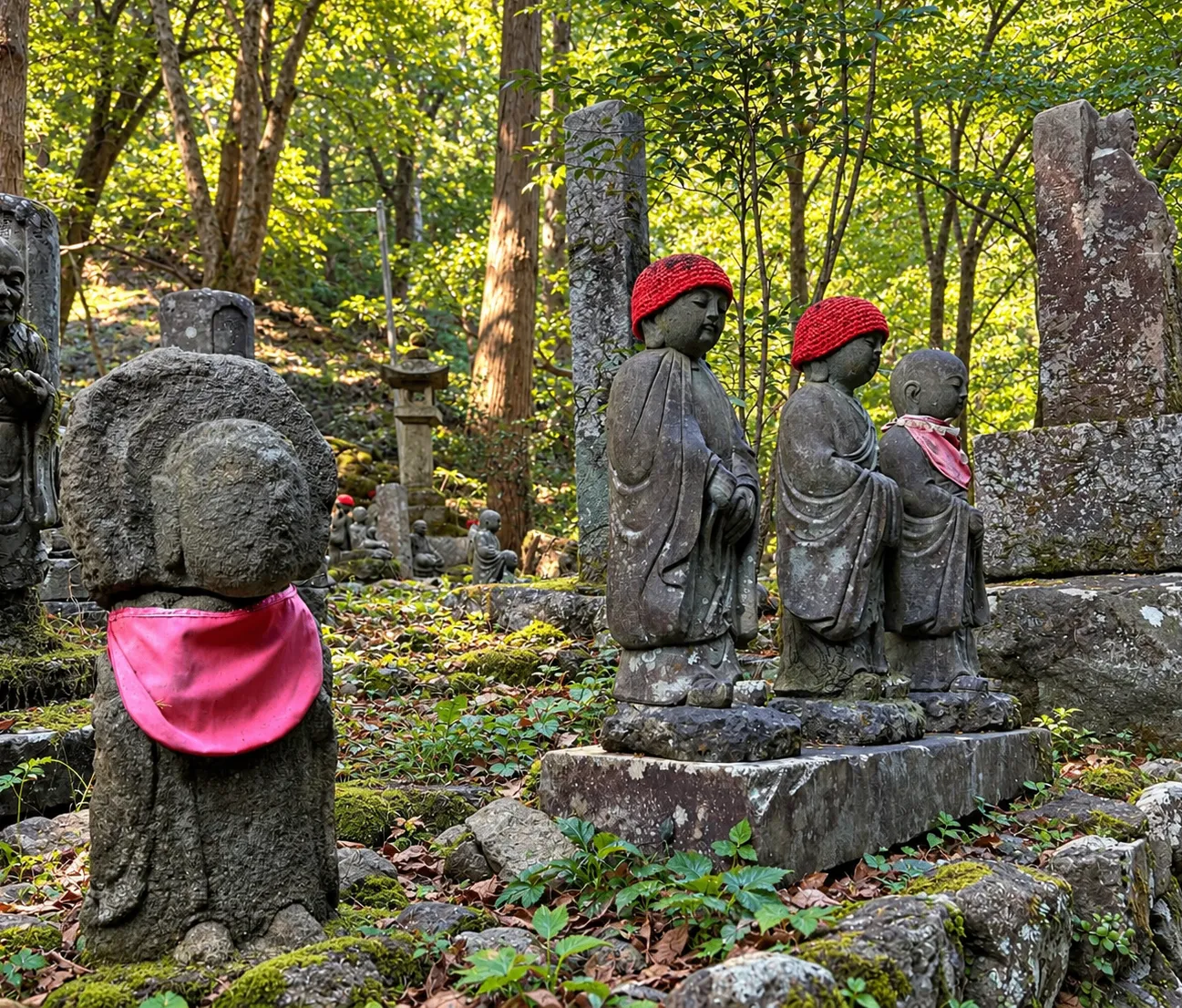
Photo: MapZamurai Staff
The Many Faces of Houkouji's Rakan Statues
Scattered throughout Houkouji's grounds are stone statues known as Gohyaku Rakan, or the Five Hundred Arhats. In Buddhist tradition, arhats are disciples who have attained spiritual awakening, and their individual expressions give this remarkable collection a distinctly human character.
Some appear cheerful, others thoughtful or stern. Their faces, gestures, and postures differ, inviting visitors to pause and study the details. Local tradition suggests that somewhere among the statues, you may even find one resembling yourself or someone you know.
Houkouji's original collection of 500 Rakan statues was installed in 1770. Additional statues have since been donated, and the grounds now contain more than 1,000.
Although some are gathered in designated areas, others appear along the paths and around the buildings. Finding them becomes an enjoyable part of exploring the temple.
One particularly intriguing group stands on a stone bridge near the approach to the main gate. Known as the Shakkyo Rakan, these figures are associated with a local mystery: depending on the account, four or five statues may be seen.
A Temple for Every Season
Houkouji's mountain setting changes noticeably with the seasons. Fresh greenery fills the valley in spring and early summer, while autumn brings warm colors to the surrounding forest.
By late October, the first hints of autumn color may already be visible, although the main foliage display generally arrives later. The temple is a popular autumn destination, and seasonal events can attract more visitors than the quiet grounds might otherwise suggest.
Rain offers another kind of scenery. Clouds settle around the mountain ridges, wet leaves deepen in color, and the waterfalls become especially atmospheric.
The temple is worth considering outside the peak foliage period, too. On quieter days, there may be few other visitors, allowing more time to appreciate the details of the buildings, statues, and natural surroundings.
For those who enjoy photography, the combination of changing weather, layered hillsides, and the temple's distinctive red bridge provides opportunities throughout the year.
Autumn travelers exploring the wider region might also consider the Mt. Horaiji Maple Festival in neighboring Aichi Prefecture, where colorful foliage surrounds an ancient mountain temple reached by a long stone staircase.
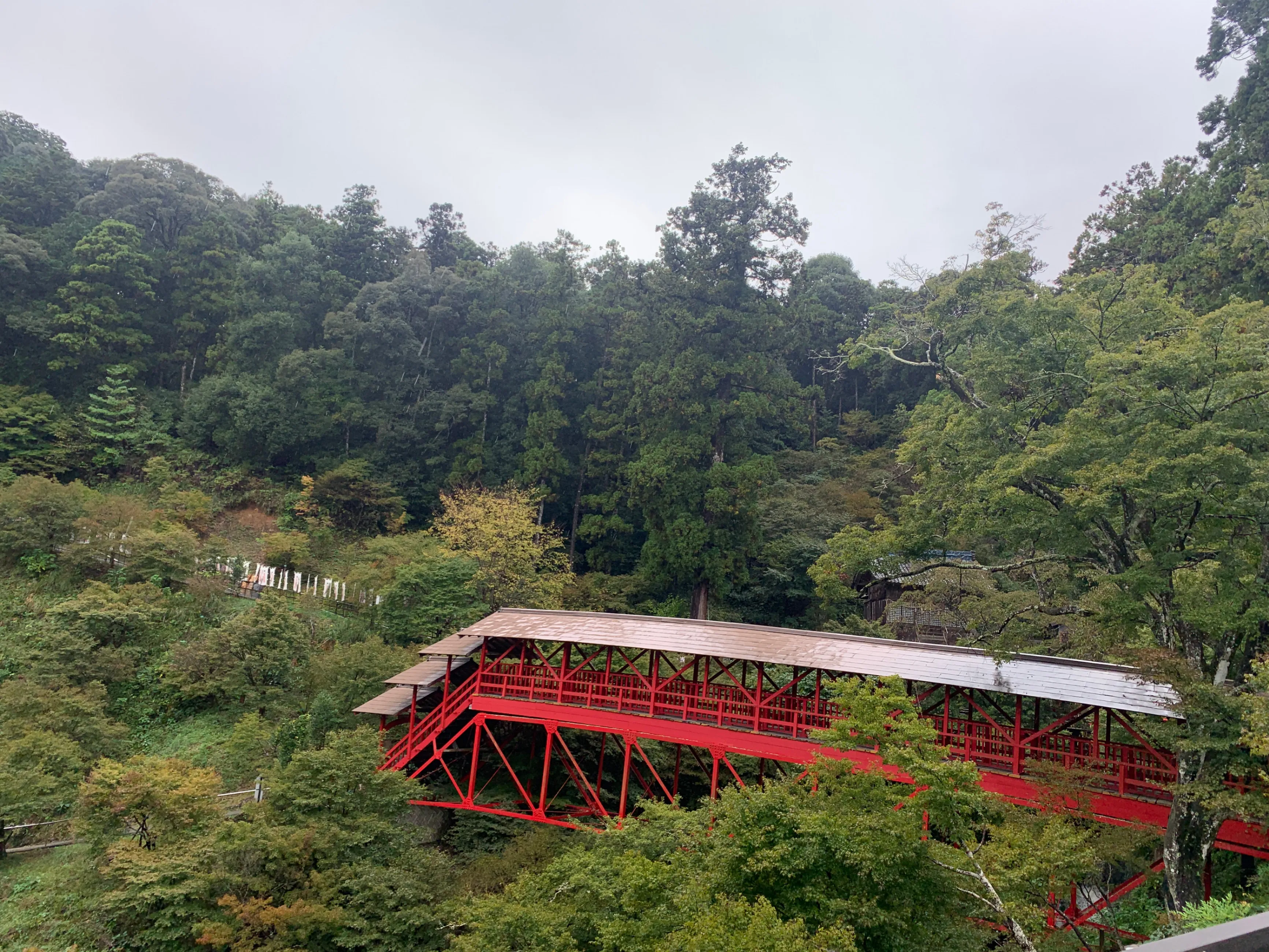
Photo: MapZamurai Staff
Zazen and Other Buddhist Experiences
Visitors interested in Zen Buddhism can explore more than the temple's architecture and gardens. Houkouji also offers opportunities to experience zazen, the seated meditation practice closely associated with Zen, as well as shakyo, the traditional hand-copying of Buddhist sutras.
These activities are optional and are not necessary to enjoy a visit to the grounds. Zazen generally requires advance reservations and at least two participants, so arrangements should be confirmed directly with the temple.
Houkouji has also been known for its shojin ryori, traditional Buddhist vegetarian cuisine. However, meal service was reported temporarily suspended in July 2026, and visitors should not assume that dining is currently available.
For current arrangements, consult the official Houkouji website.
Planning Your Visit
Houkouji is located in the mountains north of central Hamamatsu. Traveling by car is convenient, with the temple approximately eight minutes from the Hamamatsu-Inasa Interchange on the Shin-Tomei Expressway.
Both the lower parking area near Kuromon Gate and the upper parking area beside the pagoda are free. The lower approach includes an uphill walk of roughly ten minutes to the main hall. The upper parking area is a useful alternative for visitors who prefer to begin closer to the main buildings.
Allow approximately 45–90 minutes to explore the principal sights, depending on your route, pace, and interest in photography. A shorter visit of around 40 minutes is possible, but additional time makes it easier to appreciate the statues and quieter corners.
Paths include slopes, steps, and uneven surfaces. Although much of the main route is manageable for reasonably mobile visitors, it is not fully accessible, and some sections become slippery in wet weather. Wear shoes with good traction.
The temple is generally open from 9:00 a.m. to 4:30 p.m., with last admission at 4:00 p.m. Published admission is ¥700 for adults and ¥300 for elementary and junior high school students. The temple closes from December 28 through 31.
Check the official website for current details before traveling.
For travelers planning a longer day around Hamamatsu, Nukumori-no-Mori offers a striking contrast to Houkouji's traditional Japanese architecture. This whimsical collection of European-inspired buildings, small shops, and gardens feels like a miniature fairytale village.
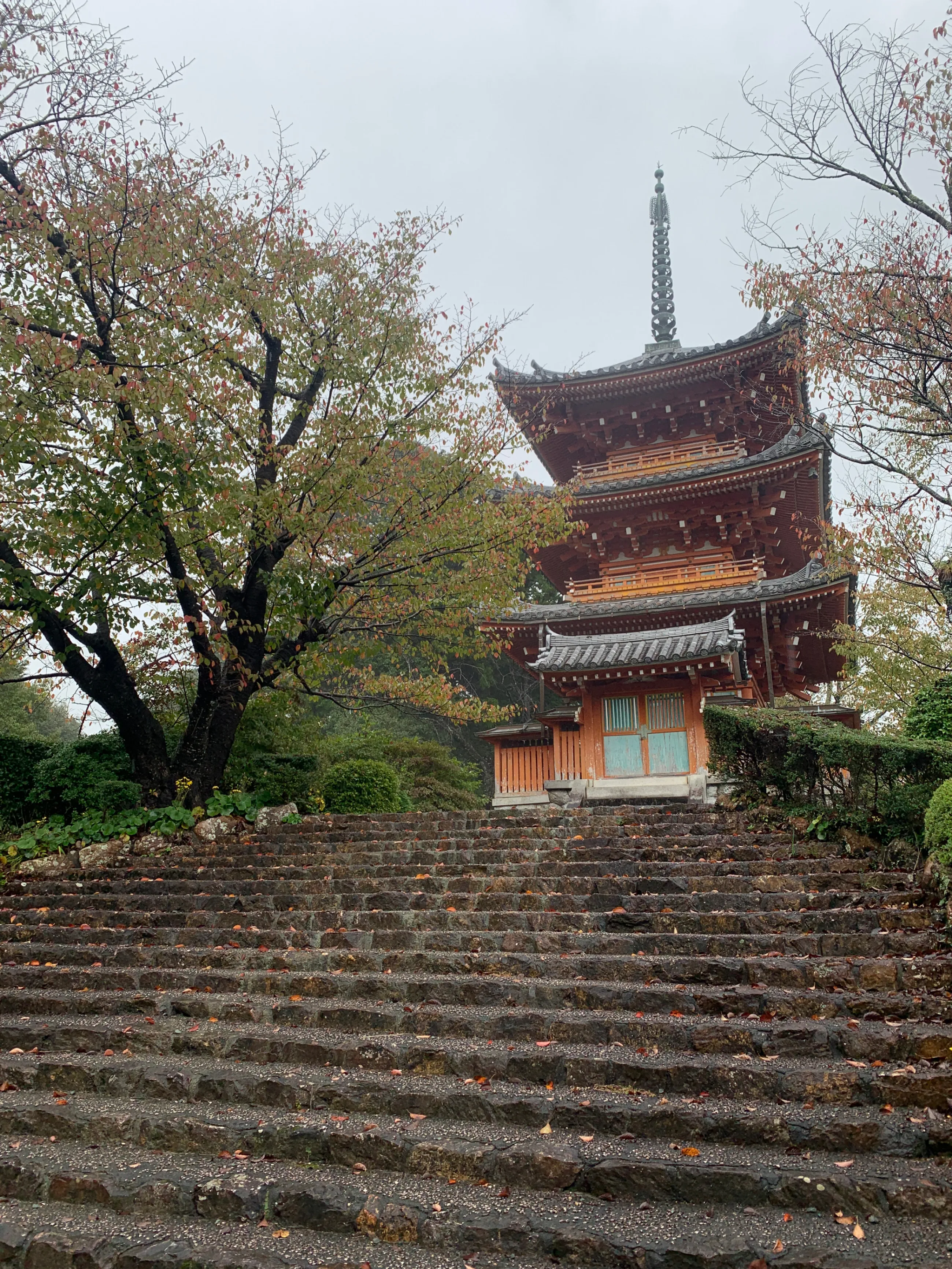
Photo: MapZamurai Staff.