
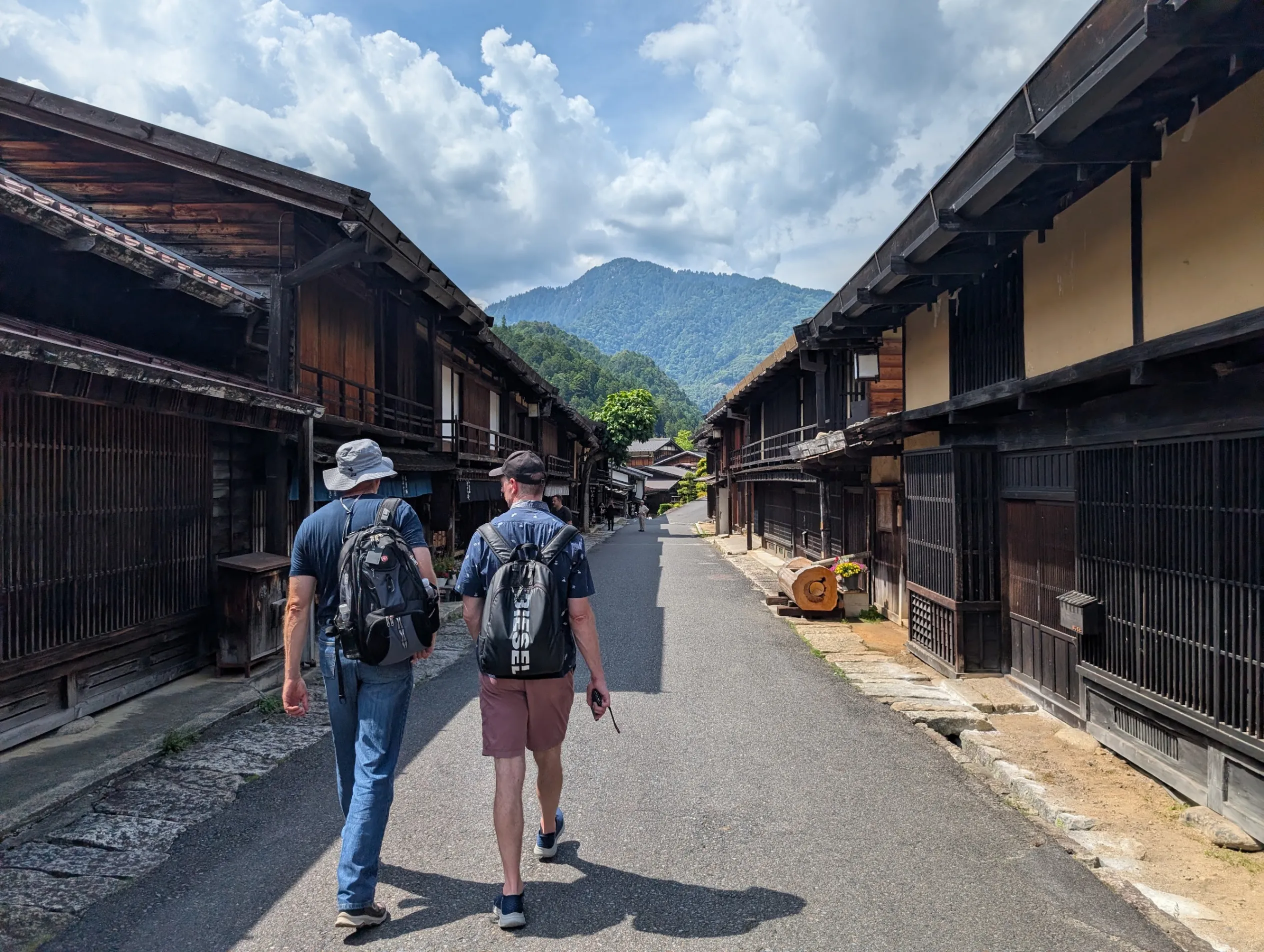
Central Japan’s manufacturing story begins far from its automobile plants. Its roots reach into the forests of Kiso, where slowly grown cypress became a prized material for temples, castles, furniture, lacquerware, and finely crafted everyday objects.
Following that story creates an unusual journey through the region. Historic post towns reveal how people once crossed the mountains. Inuyama Castle demonstrates what skilled builders could achieve with timber, while nearby karakuri puppets turn wood, strings, springs, and gravity into lifelike movement. In Nagoya, working looms and industrial machinery reveal how generations of accumulated knowledge eventually found new applications in automobile production.
This is not a simple progression in which one invention directly produced the next. It is a broader story of regional continuity: valuable natural resources, close attention to materials, and a persistent culture of refining how things are made.
The Forests That Helped Build a Domain
Kiso cypress is shaped by its environment. Trees grow slowly in the valley’s cold mountain climate, producing closely packed rings and timber valued for its strength and durability. Kiso wood was used for religious sculpture and architecture long before the age of the samurai, but demand increased as rulers built castles and expanding castle towns.
Large quantities of timber from the Kiso region were floated down the Kiso River to Yaotsu, assembled into rafts and carried to Atsuta. From there, the timber traveled north along the newly excavated Horikawa to help build Nagoya Castle and its surrounding castle town. Ordered by Tokugawa Ieyasu in 1610, the canal was part of a much larger samurai-led effort to establish Nagoya as the center of the Owari domain. The construction of castles and castle towns demanded new transportation systems, skilled craftspeople and increasingly sophisticated methods of working with wood—helping drive the innovations that would shape the region for centuries.
Heavy cutting eventually depleted the forests. Beginning in the seventeenth century, the ruling Owari clan imposed increasingly strict controls on valuable tree species. The restrictions placed a serious burden on local residents, but they also allowed the forest to recover. Today, Akasawa Natural Recreational Forest contains Kiso cypress trees more than 300 years old and offers one of the clearest places to understand this long relationship between people, power, and woodland.
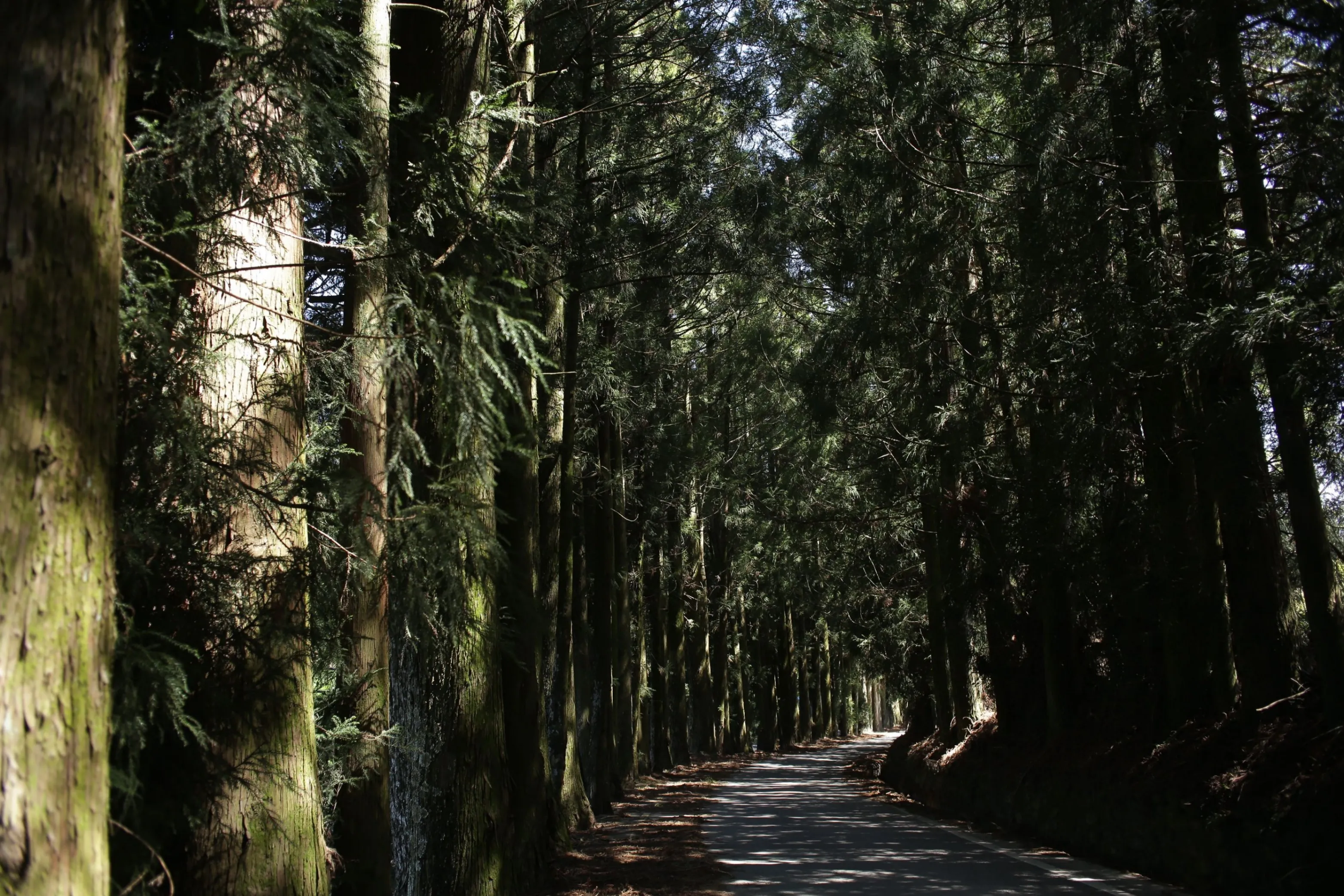
Photo by mingche lee on Pexels.
Walking Through Nakasendo History
The mountain communities of Kiso were connected by the Nakasendo, one of the principal routes between Kyoto and Edo, present-day Tokyo. Eleven of its post towns formed the Kisoji section of the highway.
The walk from Magome to Tsumago offers an accessible introduction to this landscape. Covering roughly eight kilometers, it usually takes around three hours at a comfortable pace. Clear signage leads through forests, small hamlets, open countryside, and stretches beside a mountain stream. The surface alternates between earth and carefully laid stone, providing a tangible reminder that this was once a working road rather than a recreational trail.
Starting in Magome generally makes the route more approachable. After climbing through the post town, walkers continue into the forest before crossing into Nagano Prefecture and descending toward Tsumago. A traditional rest stop along the way, Ichikokutochi Tateba Chaya, provides a welcome pause. Its irori hearth and slightly smoky atmosphere deepen the sense of distance from modern urban Japan.
The walk is suitable for most active beginners in good conditions, but snow and ice can remain during winter and into spring, especially on the Nagano side. Buses between the towns are infrequent, so return transportation should be checked before setting out. For a closer look at the sloping streets and traditional houses at the southern end of the route, walk through Magome-juku with Ninja Walking.
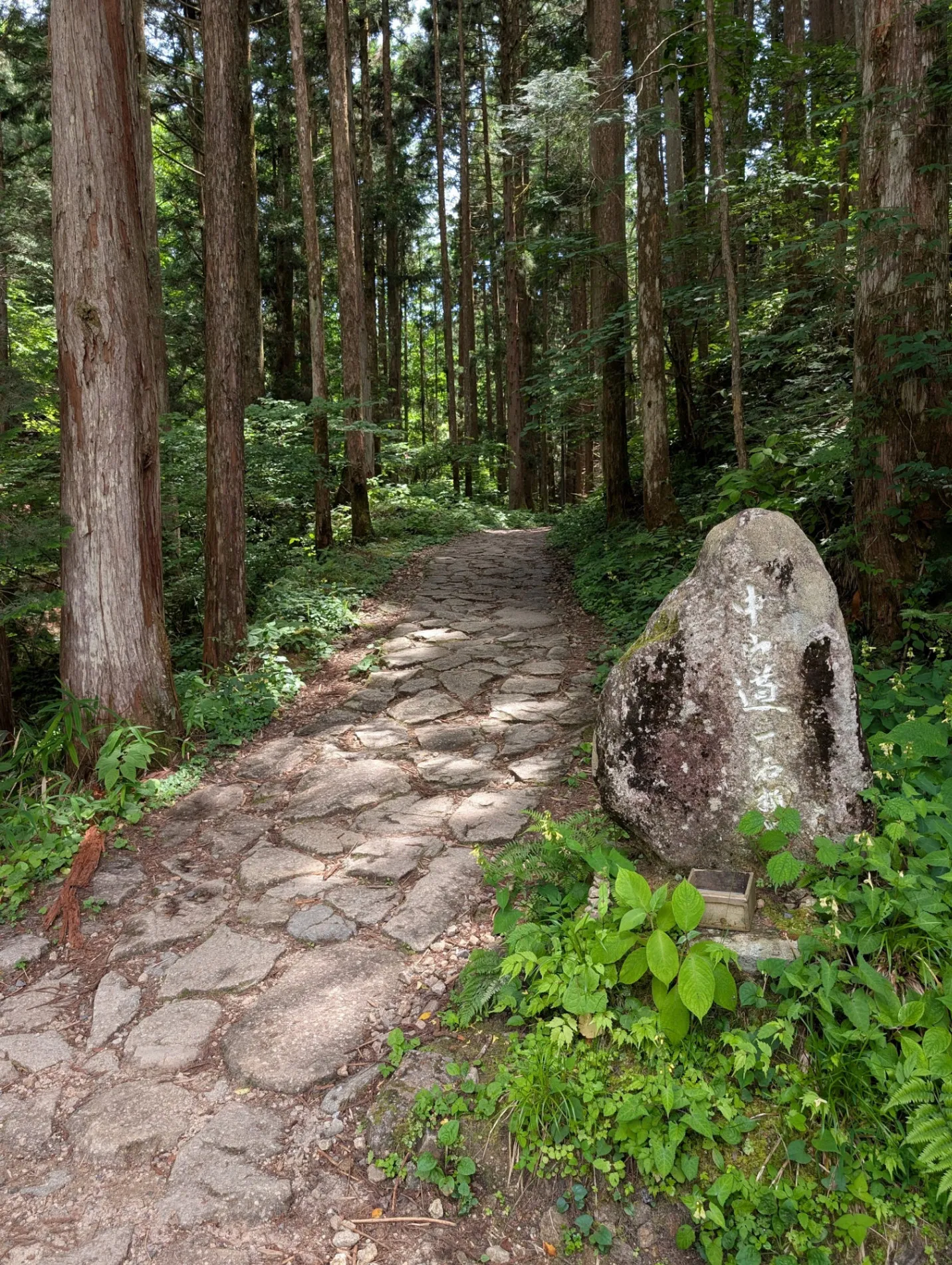
Photo by Angie Lewis
Kiso Woodcraft in Everyday Life
Kiso’s timber heritage is not confined to castles and protected forests. Wood remains visible in lacquerware, furniture, bowls, trays, cutlery, and other objects made for contemporary homes.
In Nakatsugawa, Okura Woodworks selects natural timber and uses traditional wood-turning techniques to produce tableware and other household items. The company also makes furniture from single slabs of wood. Its products demonstrate how regional craftsmanship often reveals itself through practical details: balance in the hand, a finely shaped edge, a smooth lacquered surface, or the careful use of a wood’s natural grain.
Wooden chopsticks provide a deceptively simple example. Kiso makers produce designs ranging from hexagonal profiles to softly chamfered edges, often combining an exceptionally light feel with slender tips and a carefully applied lacquer finish. These practical details reflect close attention to both material and function. Travelers interested in visiting a workshop or store should confirm public access and current hours directly before making a special trip.
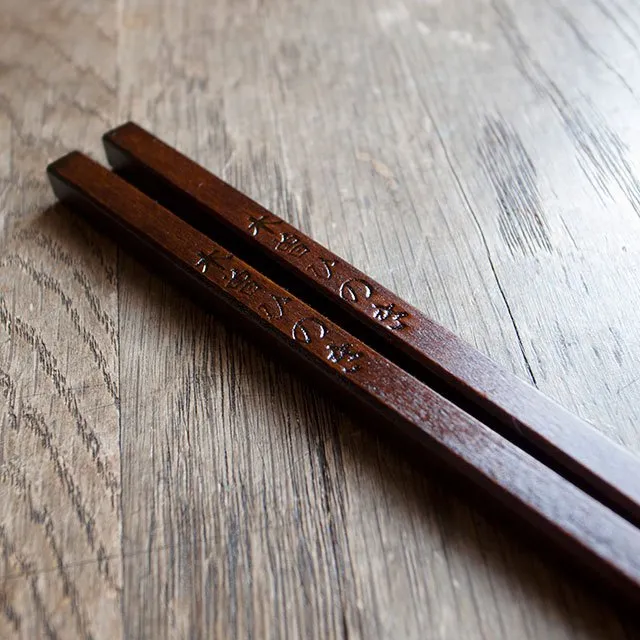
Photo by Kiso Ebiya.
Inuyama Castle: Timber, Height, and Authenticity
Farther downstream, Inuyama Castle stands on high ground above the Kiso River. Its compact wooden keep is one of Japan’s twelve surviving original castle keeps and is designated a National Treasure.
The experience inside differs markedly from entering a modern concrete reconstruction. Dark structural timbers, worn floorboards, confined rooms, and extremely steep staircases make the building’s age physically apparent. Visitors must remove their shoes and should take particular care on the stairs.
At the top, a narrow exterior balcony wraps around the keep. Many Japanese castles have higher barriers or more enclosed viewpoints; here, the relatively low railing creates an unusually open panorama. The combination of the upper floor, hilltop position, and river below gives the view an immersive quality extending beyond an ordinary observation deck.
The castle’s strategic setting also helps connect the upper and lower portions of this journey. The Kiso River was not merely scenery—it formed part of the geography through which resources, people, and political power moved. The castle can also form part of a wider walk through Inuyama’s historic center, including its traditional shopping street, local food, shrines, and tea culture, as introduced in this article from likenagoya.com.
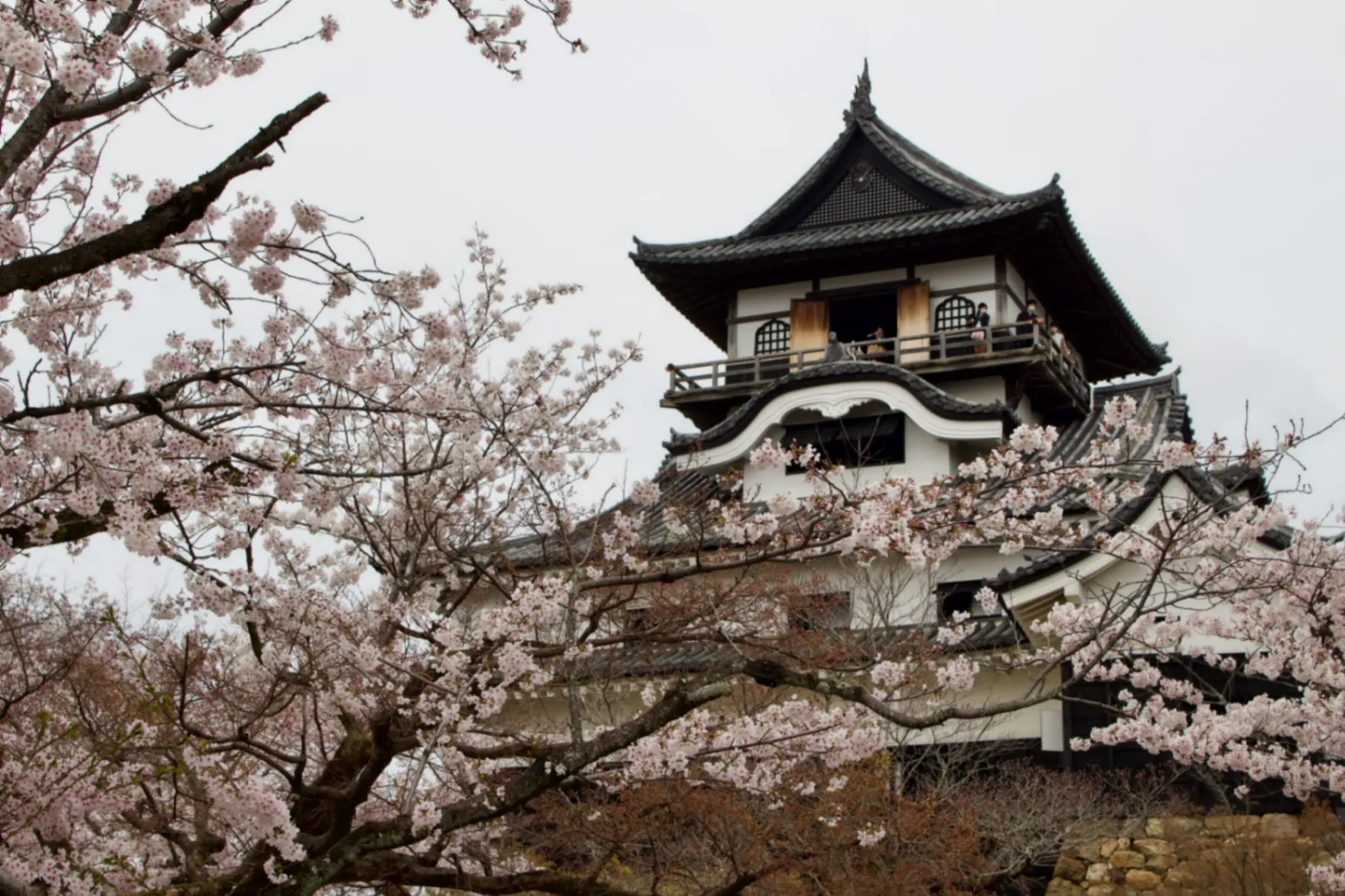
Photo by Sachina Hobo on Unsplash.
When Wood and Mechanisms Come Alive
Inuyama’s craft heritage also appears in karakuri ningyo, mechanical puppets designed to carry tea, shoot arrows, perform acrobatics, or take part in festival dramas. Depending on the design, their movements may be controlled by puppeteers or produced through internal mechanisms using springs, strings, weights, and gravity.
The IMASEN Inuyama Karakuri Museum displays these intricate figures and holds demonstrations on scheduled days. Some are associated with the floats of the Inuyama Festival, where mechanical performance, woodworking, textiles, music, and community tradition come together.
Karakuri should not be described as a direct ancestor of Toyota automobiles. Its relevance is subtler. The puppets illustrate a longstanding regional fascination with precision, controlled movement, problem-solving, and the ability to conceal complicated mechanisms inside an elegant finished object.
From Working Looms to Automobiles
The final connection becomes clearest at the Toyota Commemorative Museum of Industry and Technology, located in a former factory complex near Nagoya Station.
Toyota’s story began not with cars but with textile machinery. In the Textile Machinery Pavilion, the displays progress from early spinning and weaving tools to increasingly sophisticated powered looms. Many machines remain operational. Visitors can watch thread become cloth at close range, activate selected exhibits, and attend demonstrations that make each technological step easier to understand.
The scale and sound matter. Working machines transform industrial history from a collection of diagrams into a physical experience of movement, rhythm, and repeated refinement. The Automobile Pavilion then shows how accumulated expertise in machinery, production, and problem-solving was applied to an entirely different industry.
For visitors who have always associated Toyota exclusively with cars, the connection can be revelatory. The route from timber to textiles and automobiles was neither straight nor inevitable, but the museum demonstrates how one body of technical knowledge can create the foundation for another. A video from the Aichi Tourism Bureau provides a preview of the museum as an industrial and technical-visit destination.
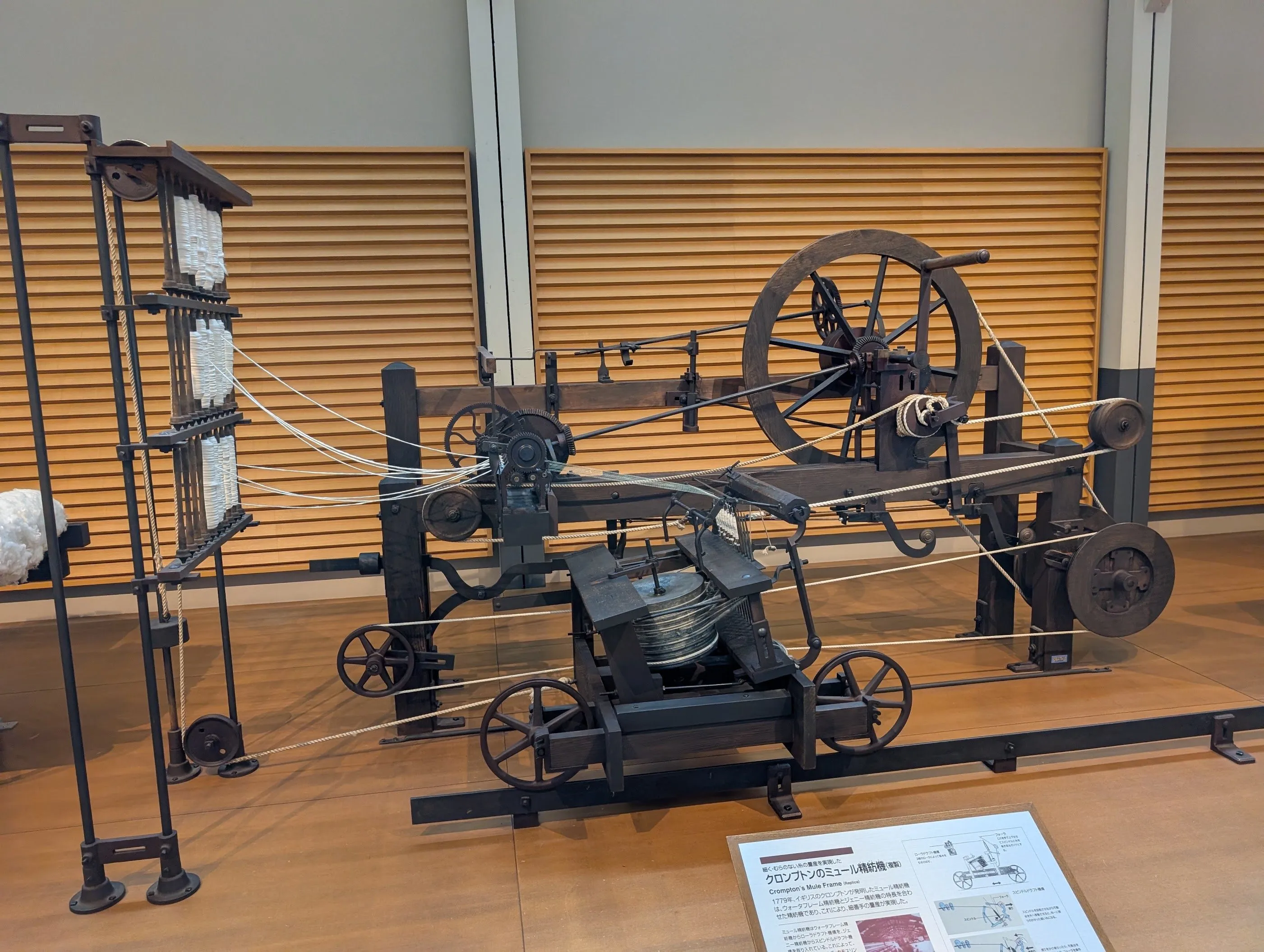
Photo by Angie Lewis
Planning the Journey
The complete story covers a broad area and is best experienced over several days rather than forced into a single excursion.
Magome and Tsumago form the most practical southern introduction to the Nakasendo. Narai-juku, farther north, can extend the journey for travelers continuing deeper into the Kiso Valley, while Akasawa Natural Recreational Forest provides the strongest encounter with the cypress landscape itself. Its regular visitor season generally runs from late April into early November, and current access information should be checked before traveling.
Inuyama Castle and the karakuri museum combine naturally as a separate day trip. The Toyota Commemorative Museum is then an easy addition to a stay in Nagoya.
Travelers do not need to visit every location to understand the theme. Even a shorter combination—walking from Magome to Tsumago, exploring Inuyama’s castle and mechanical puppets, and finishing among Toyota’s working looms—reveals how central Japan’s forests, crafts, and industries remain connected across centuries.
Frequently Asked Questions
How difficult is the walk from Magome to Tsumago?
The approximately eight-kilometer route is generally manageable for active beginners. It includes climbs, descents, earth paths, and stone paving. Snow, ice, heavy rain, and summer heat can make it more demanding.
Can the route be completed as a day trip from Nagoya?
Magome, Tsumago, Inuyama, and the Toyota museum cannot all be visited comfortably in one day. The Magome–Tsumago walk can be taken as a long day trip with careful planning, but staying in the Kiso area creates a more relaxed experience.
Is Inuyama Castle suitable for visitors with limited mobility?
The original wooden keep has very steep interior stairs and no barrier-free route to its upper floors. Visitors who cannot manage the climb can still enjoy the exterior, surrounding castle town, and views from the grounds.
Is the Toyota Commemorative Museum the same as the Toyota Automobile Museum?
No. The Toyota Commemorative Museum of Industry and Technology is in Nagoya and focuses on textile machinery and automobile manufacturing. The Toyota Automobile Museum is in Nagakute and concentrates more broadly on automotive history and historic vehicles.