
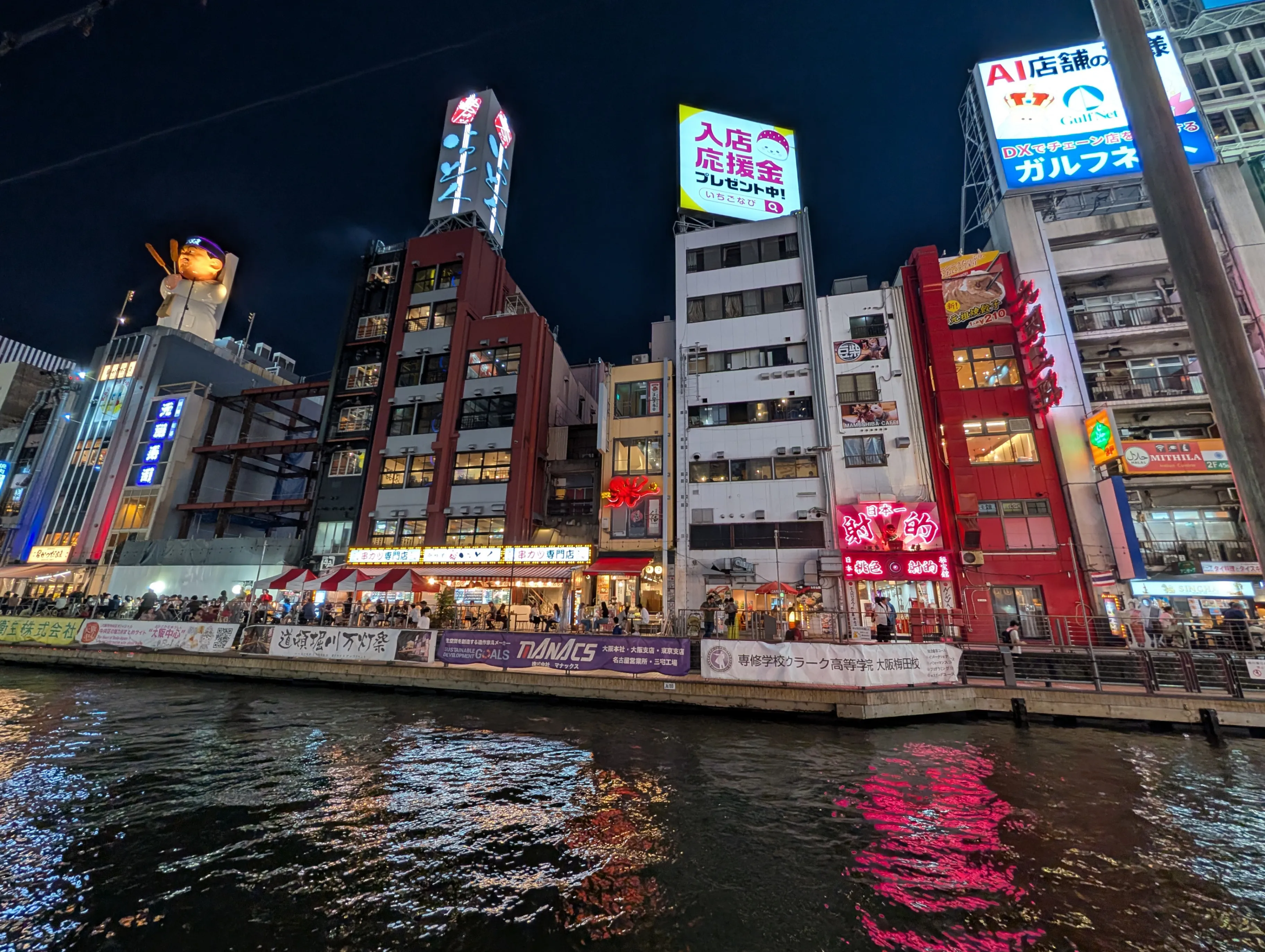
Dotonbori announces itself before the canal even appears. From Namba Station, visitors may emerge into one of Osaka’s covered shopping arcades, where crowds pass beneath bright signs and the smells of grilled batter, sauce, seafood, and fried food drift between restaurants. The sound and movement build gradually—then the arcade opens onto the riverside.
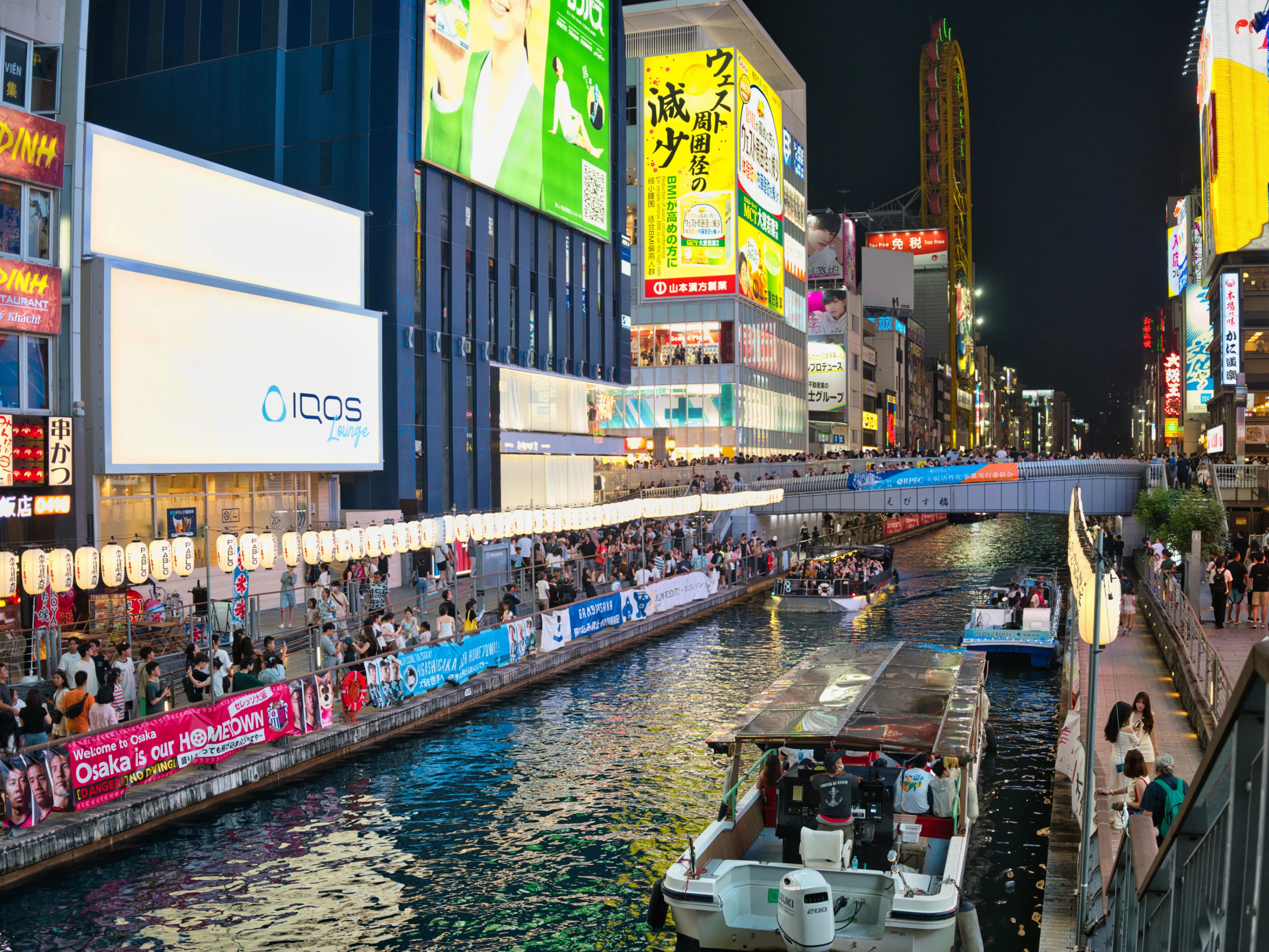
That sudden change in scale is one of Dotonbori’s most memorable moments. Tight shopping lanes give way to open sky and water, while giant crabs, dragons, octopuses, and other three-dimensional storefront figures compete with illuminated billboards for attention. At night, their colors ripple across the canal as sightseeing boats pass below.
Dotonbori is often reduced to a photograph beneath the Glico Runner, but the neighborhood rewards a slower look. Its canal, food culture, theatrical history, exaggerated advertising, and crowds are all parts of the same experience. Rather than rushing between a list of famous shops, visitors can treat Dotonbori as an evening walk through Osaka’s appetite for entertainment.
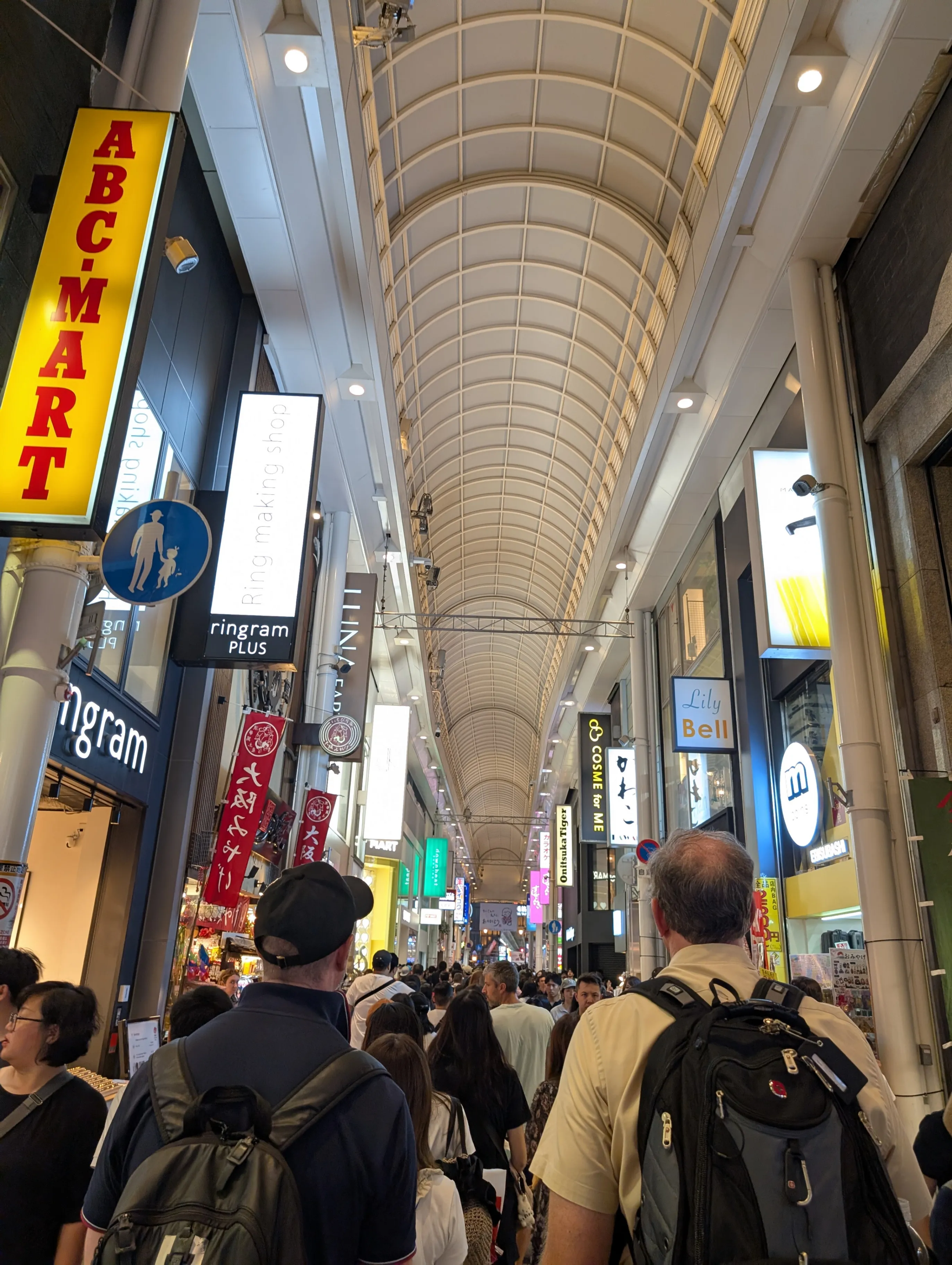
Photo by Angie Lewis
From Canal to Entertainment District
Dotonbori’s identity began with water. According to the Osaka Convention & Tourism Bureau, the district takes its name from Yasui Doton, who invested his own wealth in excavating the canal beginning in 1612. The surrounding area later prospered as a center of kabuki, theater, teahouses, restaurants, and popular entertainment.
Most of the historic theaters have disappeared, but their legacy remains visible. Osaka Shochikuza continues the area’s theatrical connection near Ebisu Bridge, while the neighborhood’s dramatic commercial signs perform for the street in their own way. The moving Kani Doraku crab, towering dragons, and oversized food models are not subtle, but subtlety is hardly the point.
The canal also makes Dotonbori easier to understand geographically. Visitors can walk along one bank, cross a bridge, and return on the other side, exploring the adjoining lanes as they go. There is no need to follow a rigid route. Zigzagging between the river, Dotonbori Street, and the surrounding arcades is part of the experience.
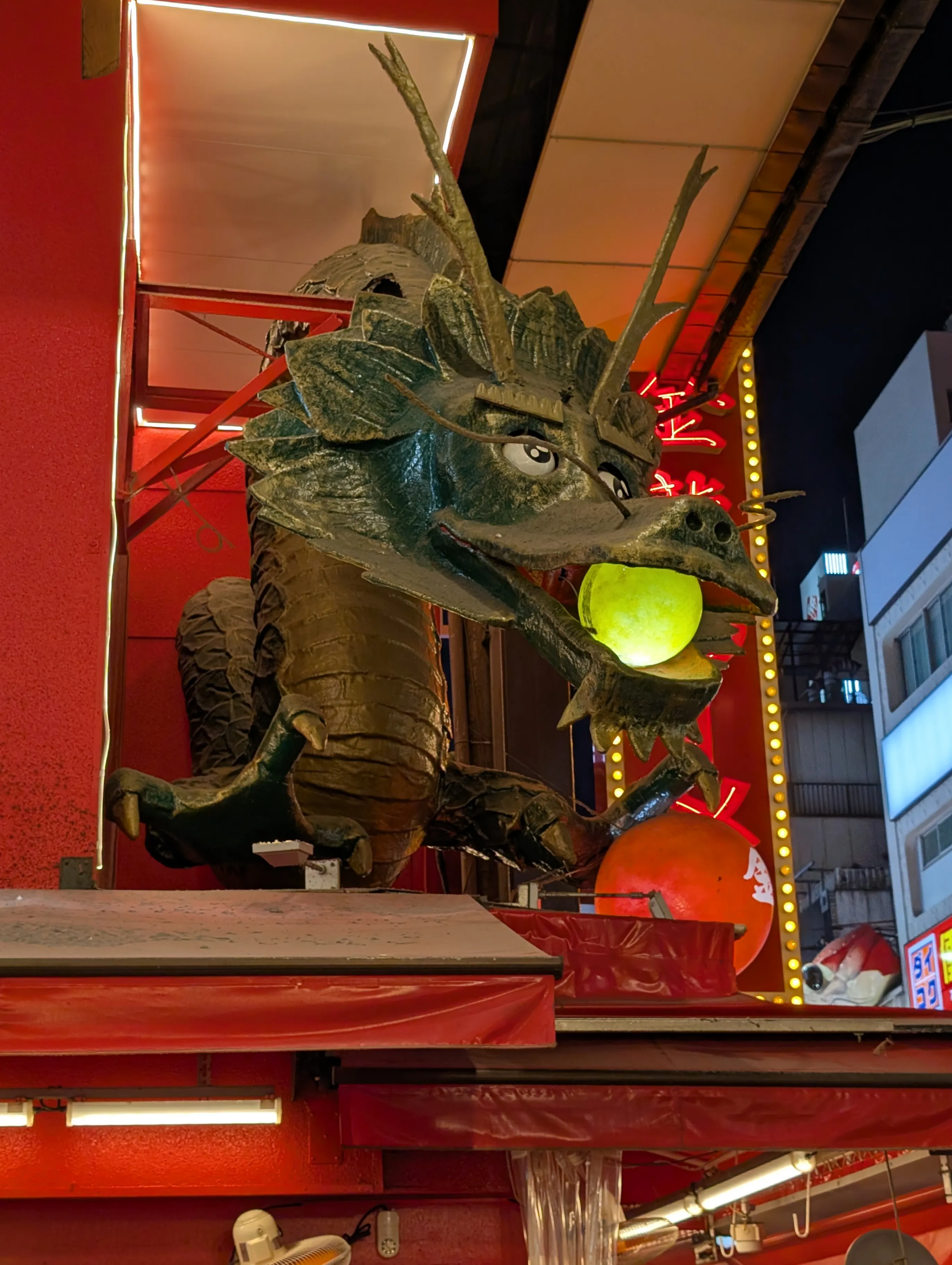
Photo by Angie Lewis
The Best Way to Experience Dotonbori at Night
Late afternoon offers the most complete transition into nighttime Dotonbori. Visitors can explore the surrounding streets in daylight, reach the canal around dusk, and watch the district change as its signs illuminate. Those arriving later will step directly into the full nighttime spectacle.
Evenings can become intensely crowded. Around 7:30 p.m. on a June visit, the canal and restaurant streets were already bustling, and pedestrian traffic became thicker as the night continued. The mood can resemble an amusement park: colorful, noisy, exciting, and accompanied by long queues.
For a quick sense of the movement, lights, and nighttime atmosphere, watch this short view of Dotonbori after dark.
Ebisu Bridge provides the classic view toward the Glico Runner, but it is also one of the busiest points in the district. Photographs are easier when visitors remain aware of moving foot traffic and avoid setting up in the center of the bridge. The riverside promenade offers more room and different angles across the water.
For travelers who want help uncovering more than the most recognizable sights, a private Osaka walking tour with a local can place Dotonbori within the broader culture of Osaka’s central neighborhoods.
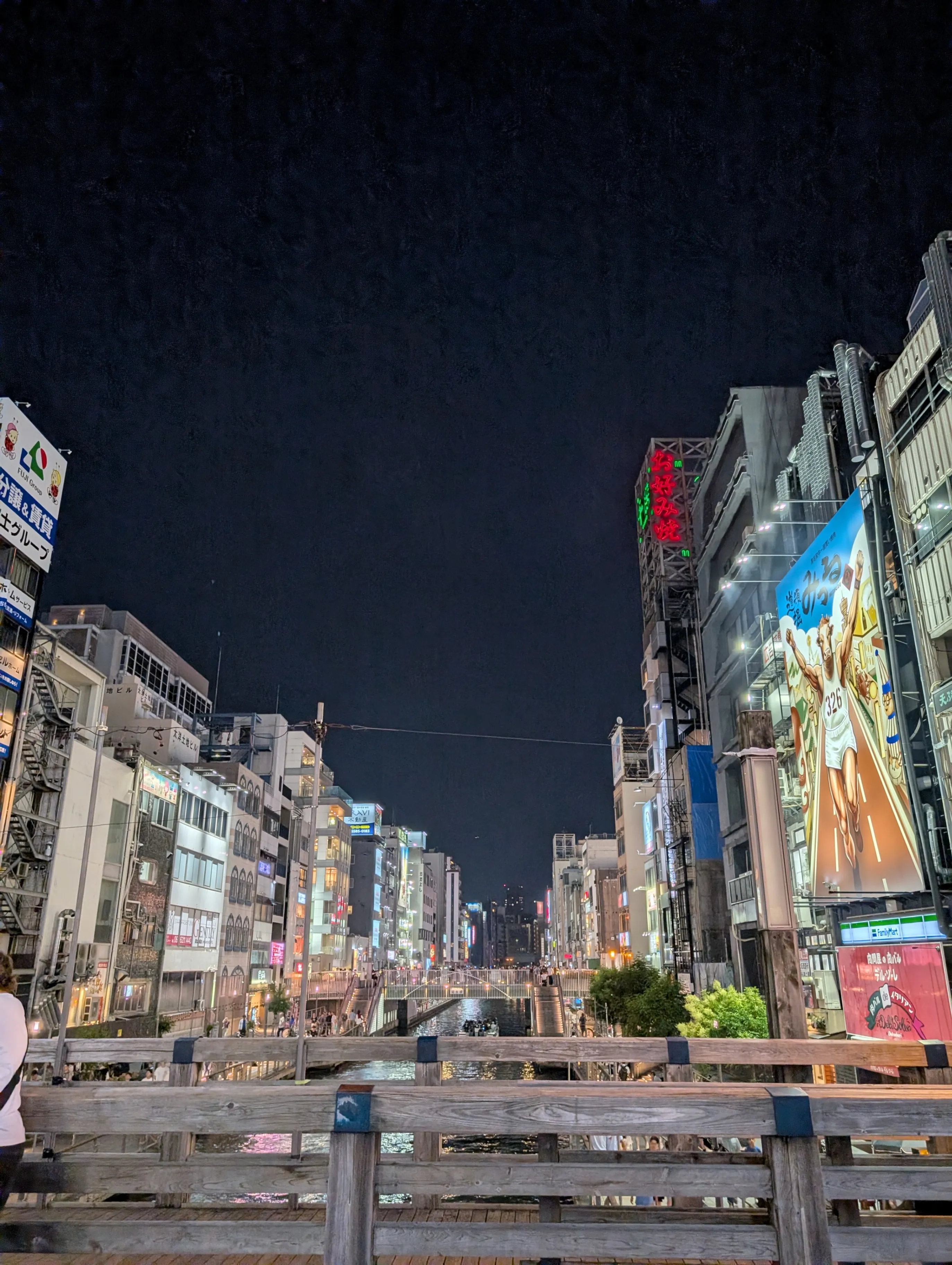
Photo by Angie Lewis
See the Canal from the Water
A cruise is more than a quick sightseeing ride. It provides a welcome seated break from the crowded streets and opens sightlines that are frequently blocked at pedestrian level. From the water, passengers can look up at the signs, pass beneath the district’s bridges, and photograph both banks without navigating foot traffic.
The Tombori River Cruise takes approximately 20 minutes and includes commentary about the district. Its compact length makes it easy to add to an evening walk without allowing the cruise to dominate the itinerary.
The low viewpoint creates particularly effective photographs of the canal, bridges, riverside activity, and illuminated building fronts. Seats and departure times are limited, however, and operating conditions can change. Visitors interested in riding should check the current schedule and ticket arrangements before planning the rest of the evening.
How to Approach Osaka’s Famous Food
Takoyaki, okonomiyaki, and kushikatsu are among the foods most closely associated with Osaka, but attempting to visit every celebrated restaurant can turn an evening into a series of queues. A more enjoyable approach is to choose one sit-down meal and leave room for a smaller snack.
Takoyaki works well as an introduction: pieces of octopus are cooked inside round portions of batter and typically finished with sauce and other toppings. Okonomiyaki is more substantial, combining batter and cabbage with selected ingredients on a hotplate. Kushikatsu consists of skewered and fried meat, seafood, or vegetables. Restaurant practices vary, so visitors should follow the instructions provided for sauces, ordering, and eating.
Popular shops throughout Dotonbori may have long lines, not only the restaurants featured most heavily in guidebooks. Travelers with limited time should avoid assuming that the next famous shop will be quicker. Eating slightly earlier, choosing one priority, or stepping into a neighboring street may make the evening more relaxed.
Those who want cultural explanation alongside tastings could also consider a street food and shopping tour, rather than navigating unfamiliar dishes and crowded restaurants entirely alone.
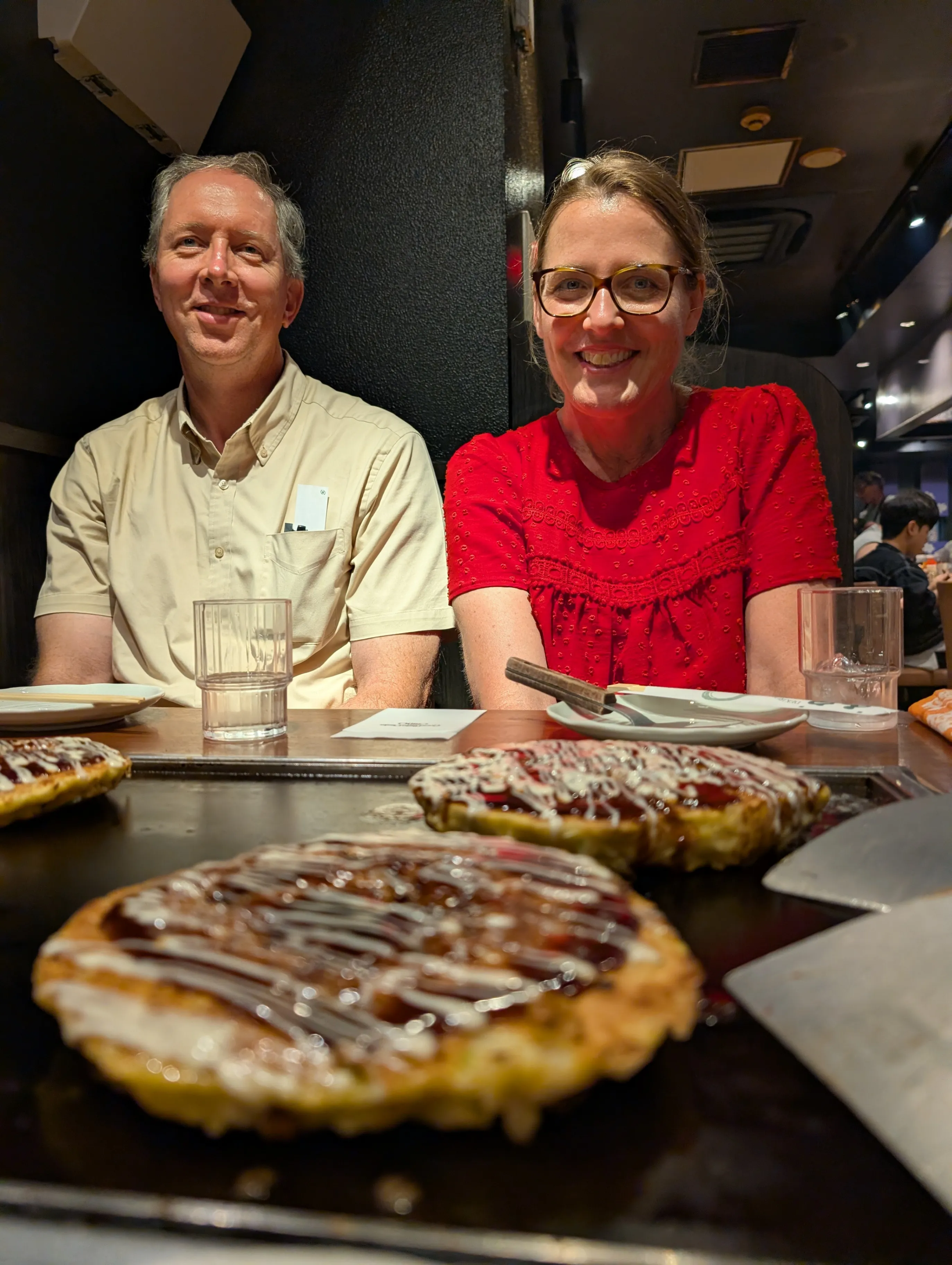
Photo by MapZamurai
Dietary Needs Require Preparation
English menus are common in this internationally popular district, but an English menu does not guarantee that every employee can discuss allergies or preparation methods in detail. Staff are often willing to help, yet a crowded restaurant during the evening rush may have limited time for a complicated conversation.
Visitors with dietary restrictions should prepare short, specific questions on a smartphone. Questions that can be answered clearly—such as whether a dish contains wheat, whether the sauce is suitable, and whether the same grill or utensils are used—are more practical than a broad request for a recommendation. A translation card may be helpful for allergies or celiac disease.
Finding gluten-free versions of Osaka specialties can be surprisingly difficult because wheat may appear in batter, sauces, and shared cooking environments. During a June 2026 visit, CHIBO Dotonbori described one okonomiyaki option as gluten-free and explained that it used different ingredients and sauces. The option was identified by asking locally, checking online, and then confirming again with restaurant staff.
Menus and kitchen practices can change. Travelers should therefore verify the current situation directly and explain the required level of avoidance, particularly when cross-contact is a medical concern.
Finding Space Beyond the Main Streets
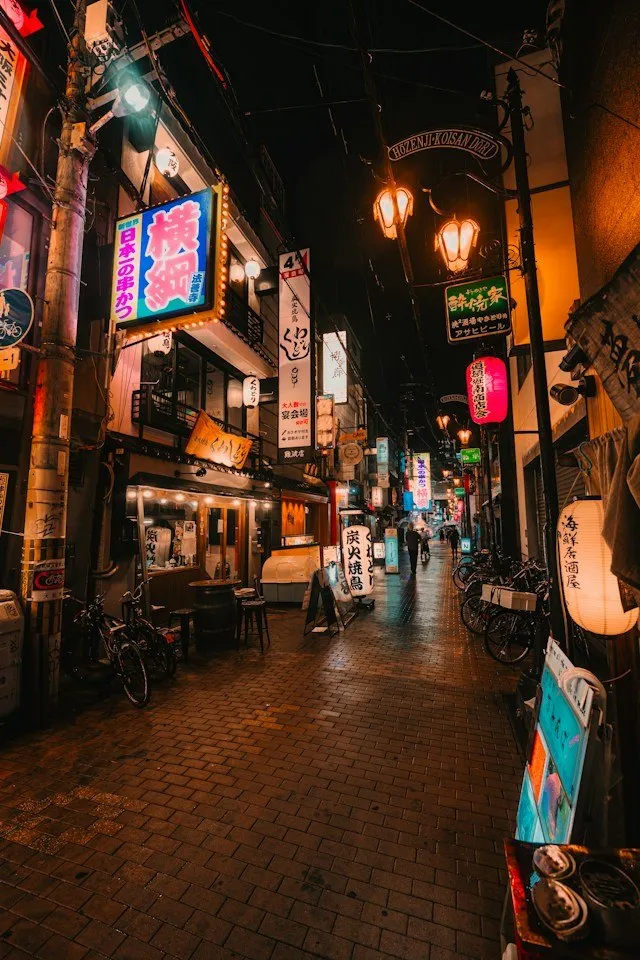
Dotonbori’s energy is part of its appeal, but it can become tiring. Visitors do not need to remain beside the canal for the entire evening. A short detour south leads to Hozenji Yokocho, a pair of narrow stone-paved lanes that developed from stalls serving worshippers at Hozenji Temple. Its compact scale and traditional restaurant fronts offer a visual contrast to Dotonbori’s billboards.
Those wanting a broader extension can continue north toward Shinsaibashi for shopping, east toward Kuromon Market during daytime hours, or south through Namba’s entertainment streets. Travelers interested in a less obvious side of the city might instead join an Osaka hidden-gems walking tour.
Simply walking away can also provide relief. Wider roads toward areas such as Honmachi feel notably calmer after Dotonbori’s dense arcades and riverside crowds. Osaka Metro is usually the more practical choice for longer distances, but an unhurried walk can help visitors decompress and see how quickly the city changes beyond its most famous nightlife district.
Frequently Asked Questions
How long should visitors spend in Dotonbori?
Around two to three hours allows time to walk both sides of the canal, explore adjoining streets, eat, and take photographs. Add extra time for restaurant queues or a cruise.
Which station is best for Dotonbori?
Namba is the most convenient general access point. The district is close to Osaka Metro, Nankai, and Kintetsu services, although the large station complex has numerous exits.
Is Dotonbori better during the day or at night?
The district can be visited at any time, but its illuminated signs and canal reflections make evening especially atmospheric. Arriving before dusk provides both daytime orientation and nighttime scenery.
Is Dotonbori suitable for travelers who dislike crowds?
The main streets and Ebisu Bridge can be extremely busy at night. Visiting earlier, choosing a weekday, using the riverside promenade, and taking breaks in neighboring streets can make the experience more manageable.
Can travelers with dietary restrictions eat in Dotonbori?
Options exist, but advance research and direct confirmation are important. Prepare clear translated questions and confirm ingredients, sauces, utensils, cooking surfaces, and cross-contact according to individual needs.