
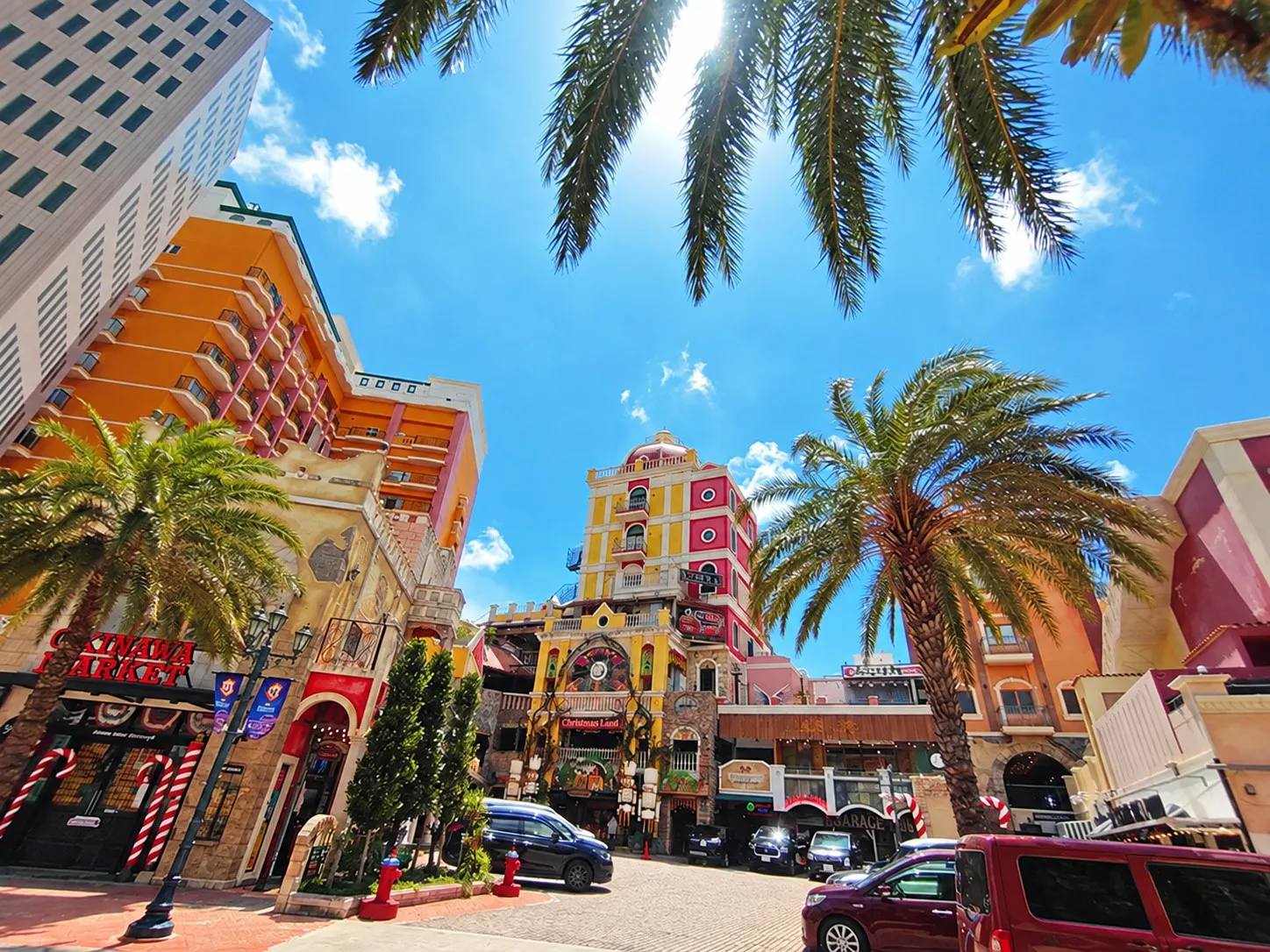
Part shopping district, part waterfront resort, and part open-air stage set, Mihama American Village is one of Okinawa’s most unapologetically playful destinations. Its brightly colored buildings rise above narrow passages filled with vintage signs, classic cars, decorative staircases, shop displays, and unexpected places to pose for photographs.
The comparison to a theme park is difficult to avoid, but the appeal is not about rides. It comes from walking through a colorful environment and taking everything in. Visitors climb between different levels, turn corners without knowing what comes next, browse shops when something catches their attention, and gradually make their way toward the sea.
American Village can be a quick lunch stop or occupy much of an afternoon and evening. Without a meal, one or two hours allows time for casual exploration. Add a burger, ice cream, sunset, or dinner by the water, and the visit can easily stretch longer.
A Theatrical Blend of Americana and Okinawa
American Village occupies part of Chatan’s Mihama waterfront, an area redeveloped from land formerly used by the U.S. military. Its proximity to American bases influenced the district’s identity, but the finished result does not reproduce any one American town. It is a stylized mixture of classic Americana, West Coast imagery, Okinawan resort design, and international pop culture.
Old posters, license plates, road signs, pins, patches, vintage objects, and American-brand clothing fill the shops. Fifties- and sixties-inspired lettering appears on signs, while oldies play inside some stores and newer American music carries through common areas. Local characters, tropical plants, and Okinawan products are blended into the theme rather than kept separate from it.
The commercialism is part of the joke. American Village is gloriously excessive, but visitors are never required to shop their way through it. Similar souvenir stores can be passed without hesitation, leaving time for specialty shops, photographs, food, or simply seeing what waits around the next corner.
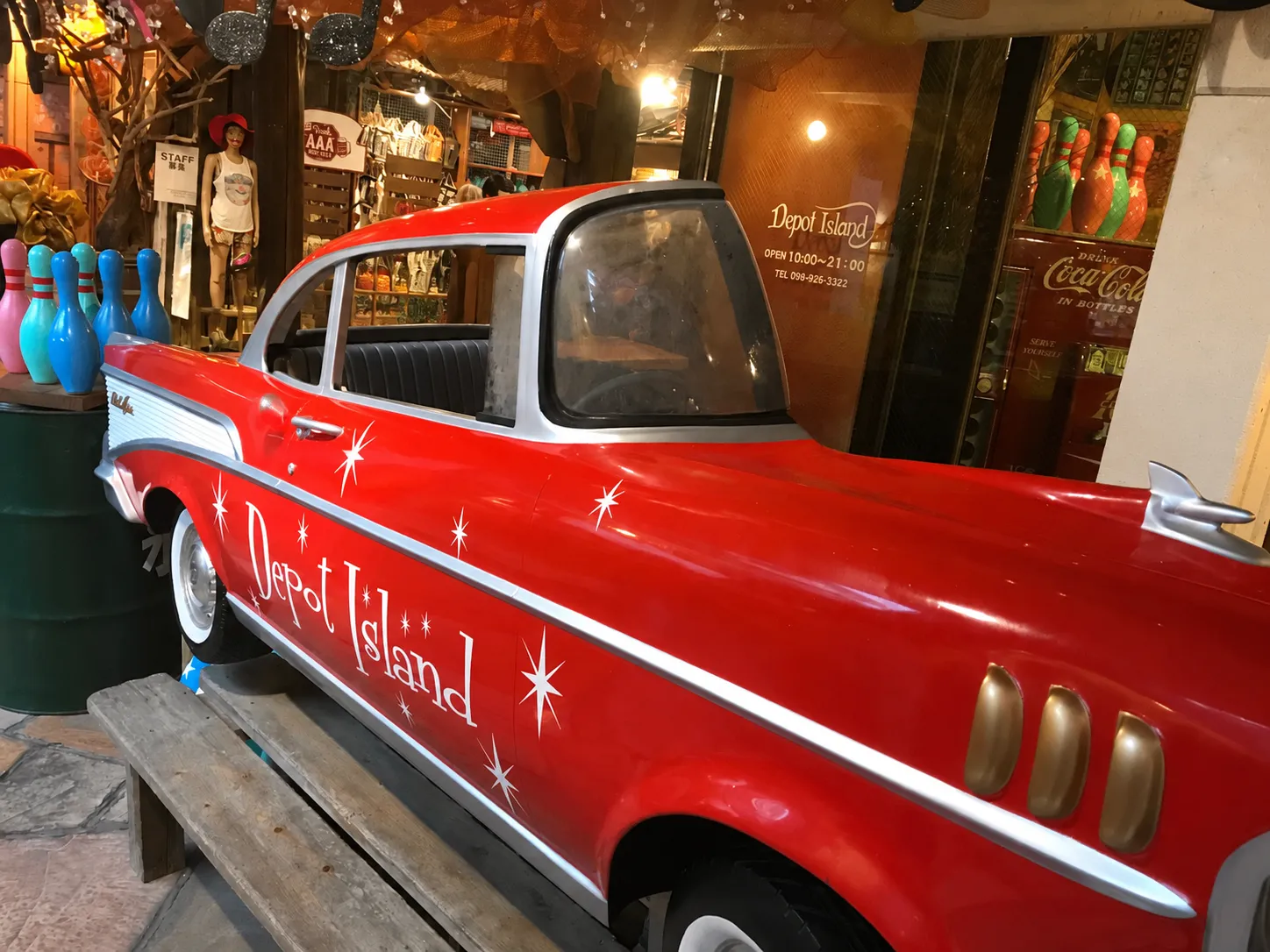
The red classic-car display at Depot Island captures the district’s spirit particularly well: nostalgic, exaggerated, photogenic, and created largely for the fun of encountering it.
The Pleasure of Getting Slightly Lost
American Village is better approached as a place to wander than as a checklist of individual attractions. Narrow lanes pass between buildings, staircases lead to upper terraces, and multiple floors overlook both interior courtyards and the waterfront. The layout creates a loose maze that continually invites visitors to explore a little farther.
Photo spots appear throughout the district. Some are obvious installations, such as oversized objects and vintage vehicles, while others are built into the architecture itself. A restaurant staircase decorated with colorful patterned tiles can be as visually interesting as a formal display. For travelers who enjoy social media photography, there is rarely a shortage of backgrounds.
The atmosphere changes with the light. During the day, the vivid façades and decorative details reinforce the theme-park feeling. Afternoon is suited to exploring, window-shopping, and photography. As evening arrives and lights appear in windows and passageways, the mood becomes softer and more romantic. The layered balconies and winding lanes make it an easy place for couples to slow down, hold hands, and explore without a fixed route.
Travelers who want to preview that transition can watch a magic-hour walk through Chatan by
Okinawa Walk.
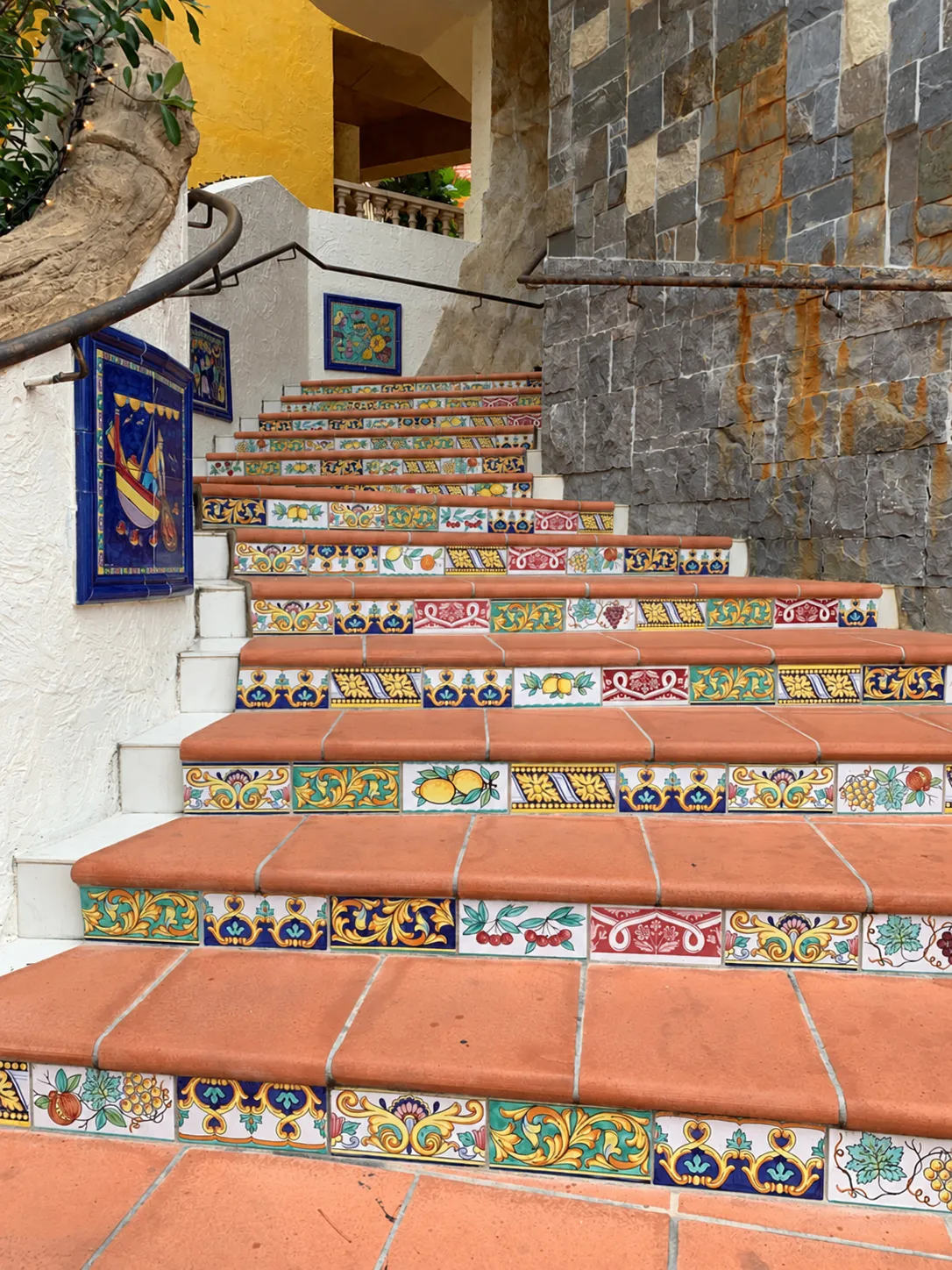
Photo by MapZamurai
Burgers, Blue Seal, and a Flexible Meal Stop
Food is one of the easiest reasons to include American Village in an Okinawa itinerary. The district offers Okinawan dishes and international cooking, but steak, tacos, Tex-Mex flavors, hamburgers, and diner-style food fit especially naturally with its American theme.
Sitting down to a large burger while golden oldies play—and perhaps adding a Coke float—can feel nostalgic to older visitors. For younger travelers, the same experience offers the cheerful novelty of stepping into a movie version of America. Families can concentrate on food, ice cream, and outdoor areas without needing to enter crowded shops.
Blue Seal, the ice cream brand famously associated with Okinawa, is an especially fitting stop. There are three locations in and around the complex: Blue Seal Depot Island Seaside, Blue Seal Depot Island, and Blue Seal American Village. If one has a long queue, it is worth checking whether another nearby branch is quieter rather than immediately joining the line. Visitors should confirm current locations through the official American Village shop directory.
American Village can also serve as a lunch stop after arriving in Okinawa, particularly for travelers driving north from Naha Airport. Depending on the final destination, the visit can be limited to a meal or extended with another hour or two of wandering.

Photo by MapZamurai
From the Maze to the Waterfront
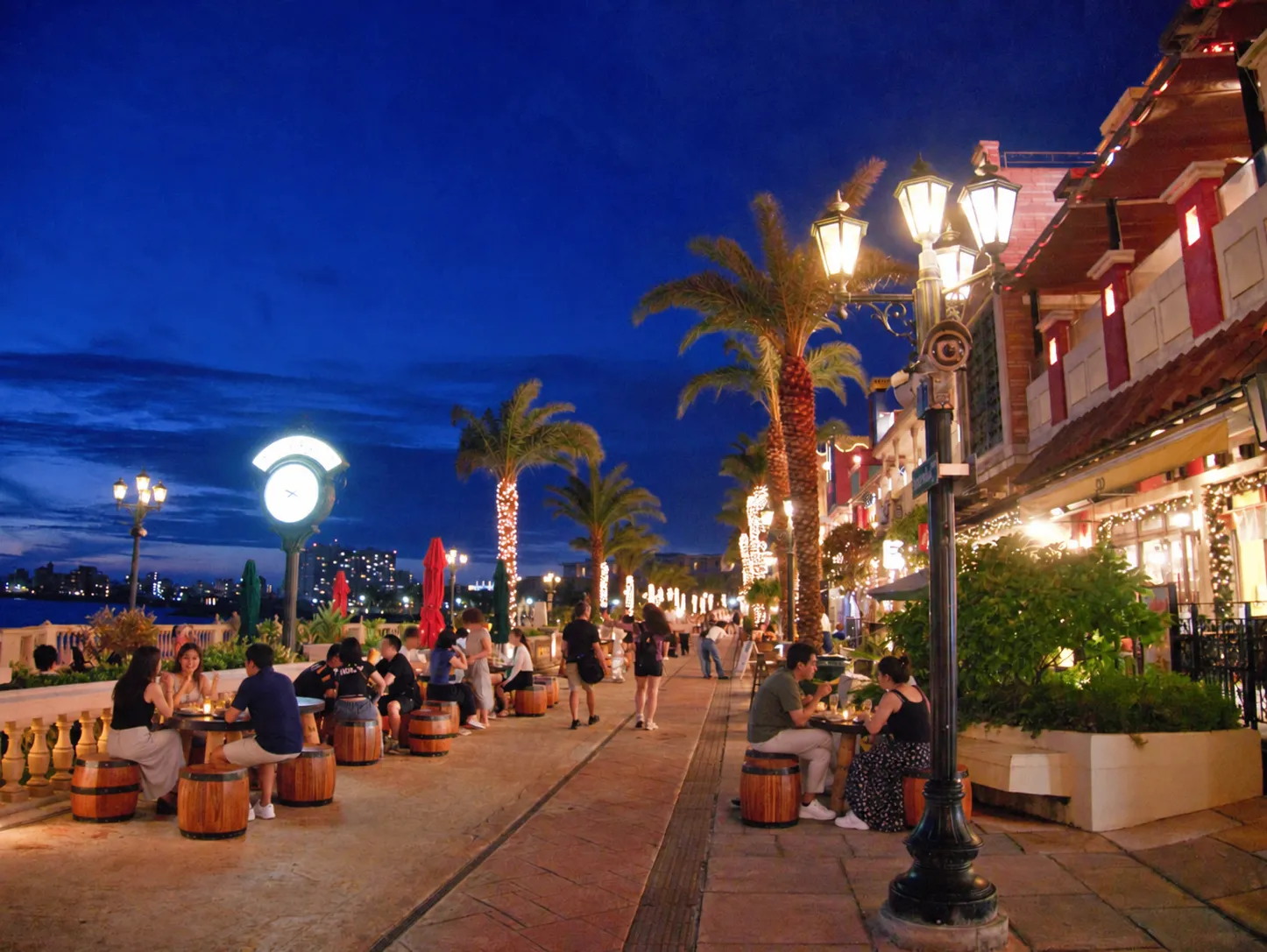
The Depot Island Boardwalk provides a natural conclusion to a visit. After the enclosed feeling of the narrow shopping passages, the waterfront suddenly opens into a broad, two-level promenade facing west across the sea.
Restaurants occupy the colorful multi-story buildings behind it, with open windows, terraces, and balconies overlooking the water. Tropical planting softens the promenade, while drinks or ice cream provide an excuse to linger. The mood remains recognizably American Village, but the emphasis shifts away from shopping and toward dining, conversation, and the view.
This is particularly effective near sunset. The sea lies directly to the west, allowing the changing light to spread across the water as the buildings begin to illuminate behind the boardwalk. Continuing south toward Sunset Beach generally brings a quieter atmosphere, but the Depot Island waterfront itself offers the fullest combination of scenery, dining, and evening activity.
A walk along the American Village Boardwalk by Okinawa Walk provides a useful preview of the waterfront layout.
Fireworks are also held on selected weekend and event dates. Displays are brief—often only several minutes—but can provide a memorable surprise during dinner or an evening walk. Schedules change, so visitors should check the official American Village news page rather than planning around an assumed weekly performance.
Planning a Visit to American Village
Drivers should allow some flexibility when arriving. American Village has several parking areas, and cars are constantly entering and leaving, but finding an open space can still require patience. A video guide to five free parking areas by Okinawa Walk can help visitors understand the layout before arrival.
Parking is free in designated American Village areas, but nearby private lots should not be treated as overflow parking. In particular, the parking area belonging to the neighboring home improvement store is strictly for its customers.
Travelers arriving without a car can use buses serving the Mihama and Kuwae area. Routes, fares, and timetables may change, so the official access page should be checked together with the relevant bus operator before travel.
Most exploration is on foot. Elevators are available in many buildings, but they may take some searching, and dense shop layouts are not always convenient for wheelchairs or strollers. The broad waterfront promenade is generally easier to navigate than the narrow interior passages. Visitors with specific mobility requirements should allow extra time and ask the tourism information center for the most suitable routes.
Several hotels are directly connected to or located within the district, making American Village more than a short sightseeing stop for some travelers. For others, its flexibility is the main advantage: arrive for lunch, stay for photographs, add ice cream, or return at sunset for dinner beside the water.
Frequently Asked Questions
How long should visitors spend at American Village?
Allow approximately one to two hours for wandering and casual shopping. A meal, sunset, or extended boardwalk visit can add another hour or more.
What is the best time to visit American Village?
Daytime offers the clearest view of the colorful architecture and photo spots. Late afternoon is ideal for combining exploration with sunset, dinner, and the illuminated evening atmosphere.
Is American Village suitable for children?
Yes. Families can enjoy the open-air streets, photo spots, casual restaurants, and ice cream without entering the more crowded shops. Adults should still supervise children around roads, stairs, upper levels, and the waterfront.
Is American Village free to enter?
There is no general entrance fee. Visitors pay only for food, shopping, entertainment, or other services they choose to use. Designated American Village parking areas are also free, although spaces may be difficult to find at busy times.
Is the former Ferris wheel still operating?
No. The Ferris wheel closed in 2022 and has since been removed. Older photographs and travel guides may still show it as a landmark.